Measuring ROI of hyperautomation: success stories in SaaS

Getting a clear Hyperautomation ROI SaaS can feel tricky. You’re investing in complex tech. It’s tough to see direct returns sometimes. But measuring Hyperautomation ROI SaaS isn’t just possible. It’s essential for your business. We’ll break down how to track these benefits. You’ll see real-world examples too. This isn’t theoretical talk. This is about making smart business moves. Your company needs to optimize operations. You want to reduce costs. Accelerating digital transformation for businesses is a must. Hyperautomation is the answer.
Why measuring hyperautomation ROI SaaS matters
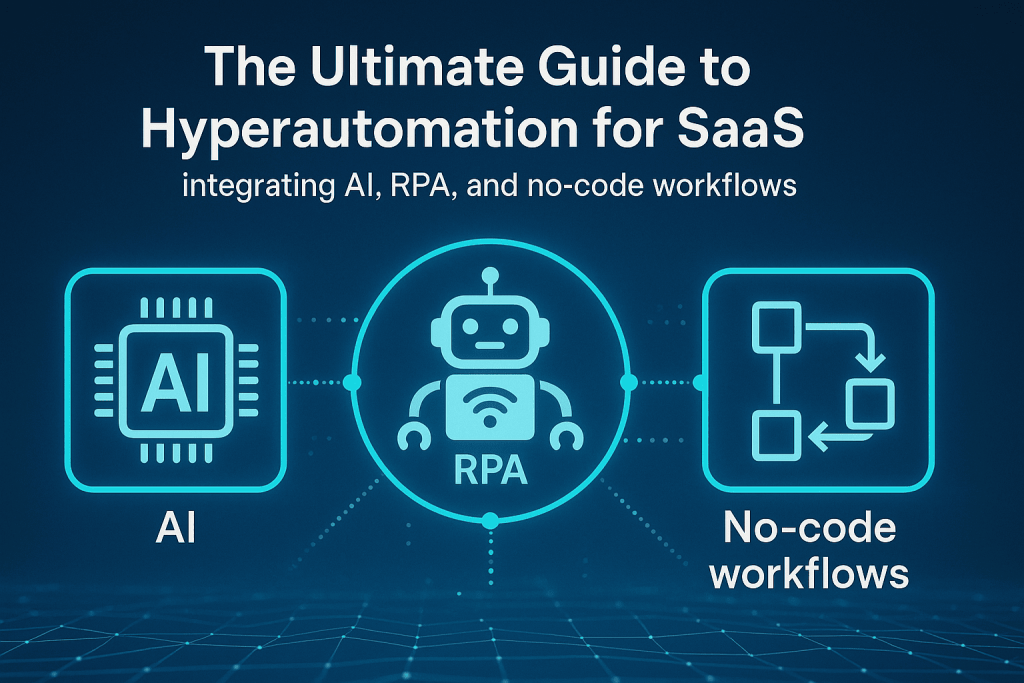
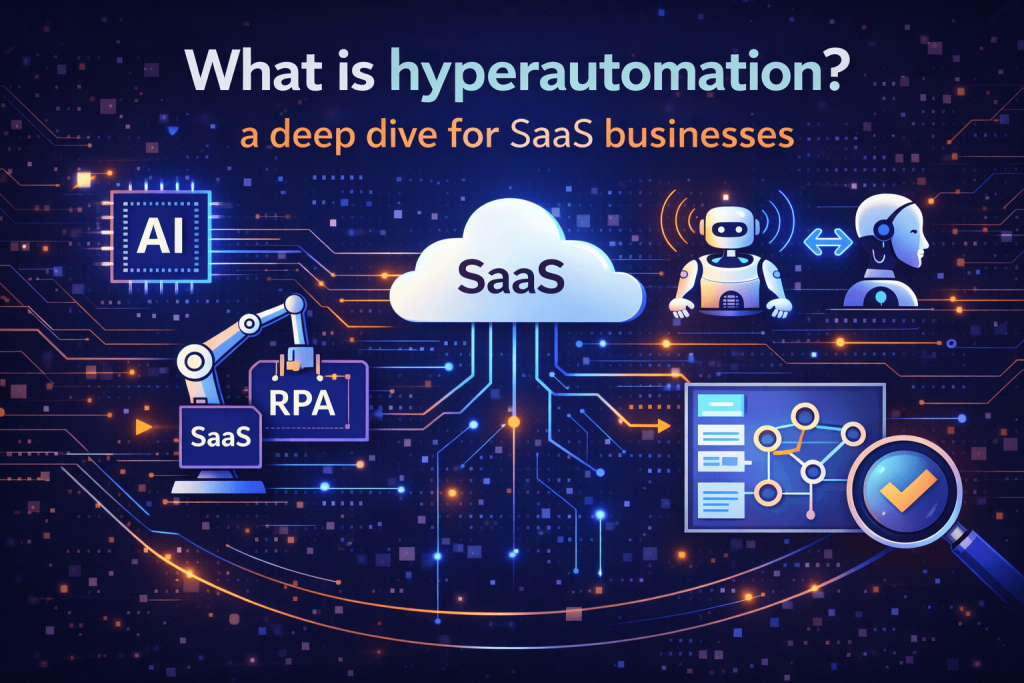
You’ve heard the buzz about hyperautomation. It combines AI, RPA, and low-code/no-code development. This powerful mix streamlines your operations. But without measuring Hyperautomation ROI SaaS, you’re flying blind. You won’t know if your investments are paying off. You can’t make informed decisions. Proving value secures future funding. It also shows stakeholders the impact. This isn’t just about saving money. It’s about strategic growth.
Identifying key performance indicators (kpis) for hyperautomation ROI SaaS
To measure Hyperautomation ROI SaaS, you need solid KPIs. Don’t just guess what’s working. Focus on quantifiable metrics. Think about what truly impacts your bottom line. These metrics show the real story.
- cost reduction: This is often the first thing people consider. Look at labor costs saved. Check infrastructure expenses. Reduced error rates also save money.
- operational efficiency: How much faster are your processes? Track cycle times for tasks. Measure throughput improvements. Faster operations mean more output.
- employee productivity: Are your teams doing more valuable work? Automating repetitive tasks frees them up. Measure time spent on strategic initiatives. Happy employees are productive employees.
- customer satisfaction: Better processes lead to happier customers. Faster service, fewer mistakes. Monitor customer feedback scores. Higher satisfaction means better retention.
- compliance and risk reduction: Automation reduces human error. This helps meet regulatory standards. It lowers the risk of penalties. This is a huge, often overlooked, benefit.
Actionable steps to measure hyperautomation ROI SaaS
You need a structured approach. Just throwing tools at problems won’t work. A clear plan helps you track progress. It ensures you capture all the benefits.
Step 1: define your baseline before hyperautomation
Before you change anything, know your starting point. Document current processes. Measure existing costs and times. This baseline is crucial. It gives you something to compare against. Without it, you can’t prove improvement. This is where process mining becomes vital. It uncovers hidden inefficiencies. It shows you exactly what to automate.
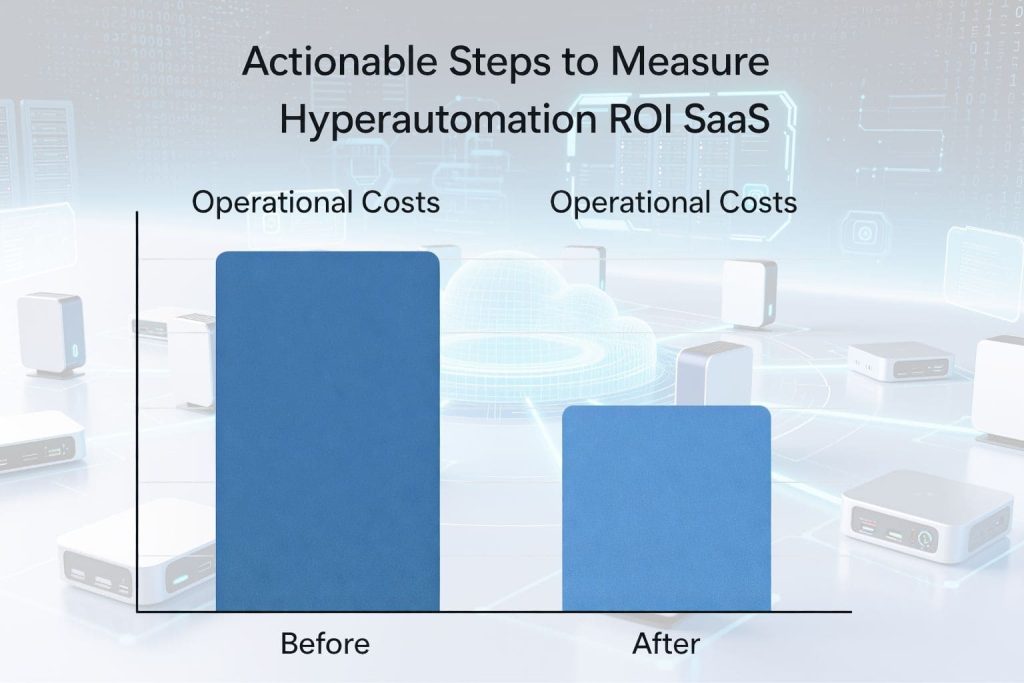
Chart Graphique depicting cost savings over time due to automation.
Step 2: choose the right hyperautomation tools
Not all tools are equal. Pick ones that fit your specific needs. Consider AI-driven automation for complex tasks. Look into low-code/no-code development platforms. These speed up deployment. They empower citizen developers. Your enterprise automation strategy should guide these choices. Each tool should serve a purpose.
Step 3: implement and track with precision
Roll out your automation solutions carefully. Monitor performance from day one. Use dashboards to visualize your KPIs. Track every dollar saved and every hour gained. Be diligent with data collection. This data proves your Hyperautomation ROI SaaS.
Step 4: analyze and report your hyperautomation ROI SaaS
Regularly review your data. Compare it to your baseline. Create clear reports for stakeholders. Highlight the financial gains. Show the operational improvements. This transparency builds trust. It justifies your ongoing investment in Hyperautomation ROI SaaS.
Success stories: real hyperautomation ROI SaaS in action
These examples show what’s possible. They prove that Hyperautomation ROI SaaS is real. Other companies are already seeing big wins. You can too.
SaaS company A: boosting customer support with AI-driven automation
This SaaS provider faced high support costs. Their agents handled many repetitive queries. They implemented AI-driven automation. This included intelligent chatbots and automated ticket routing. The result was impressive. They saw a 30% reduction in support staff costs. Customer satisfaction scores jumped by 15%. This clearly shows the Hyperautomation ROI SaaS. Agents focused on complex issues. Response times improved significantly. This was a clear win for their digital transformation for businesses.
SaaS company B: accelerating product development with low-code/no-code development
A growing SaaS firm struggled with slow development cycles. They needed to launch new features faster. They adopted low-code/no-code development tools. This allowed non-developers to build internal apps. It also sped up prototype creation. Development time for internal tools dropped by 50%. Time-to-market for new features decreased by 20%. This direct impact on revenue demonstrates strong Hyperautomation ROI SaaS. It also fostered innovation across teams.
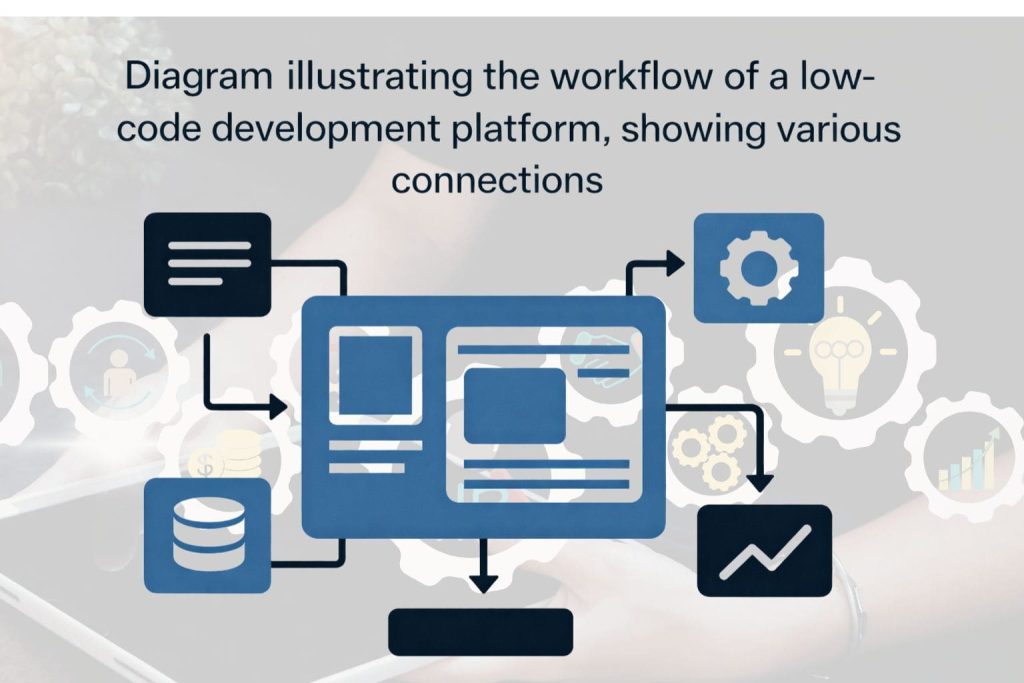
SaaS company C: optimizing financial operations through process mining
Another SaaS company had complex billing processes. Errors were common. Reconciliation was a nightmare. They used process mining to map everything out. This revealed bottlenecks and inefficiencies. They then implemented RPA for invoice processing. They automated reconciliation tasks. This led to a 25% reduction in processing errors. Their audit readiness improved dramatically. Financial close times were cut by 10 days. This is a solid example of Hyperautomation ROI SaaS. It shows the power of understanding your processes first. It’s part of a smart enterprise automation strategy.
The bigger picture: hyperautomation ROI SaaS and digital transformation
Hyperautomation isn’t just about isolated projects. It’s a core component of your digital transformation for businesses. It connects disparate systems. It optimizes end-to-end workflows. This holistic approach maximizes your Hyperautomation ROI SaaS. Think about long-term strategy. Don’t just fix individual problems. Build an integrated, automated future.
Integrating hyperautomation into your enterprise automation strategy
Your enterprise automation strategy needs a clear vision. Hyperautomation should be central to it. It’s not a one-time fix. It’s a continuous journey. You need to constantly identify new automation opportunities. Leverage AI-driven automation for deeper insights. Keep expanding your low-code/no-code development capabilities. This ensures sustained Hyperautomation ROI SaaS. It keeps you competitive.
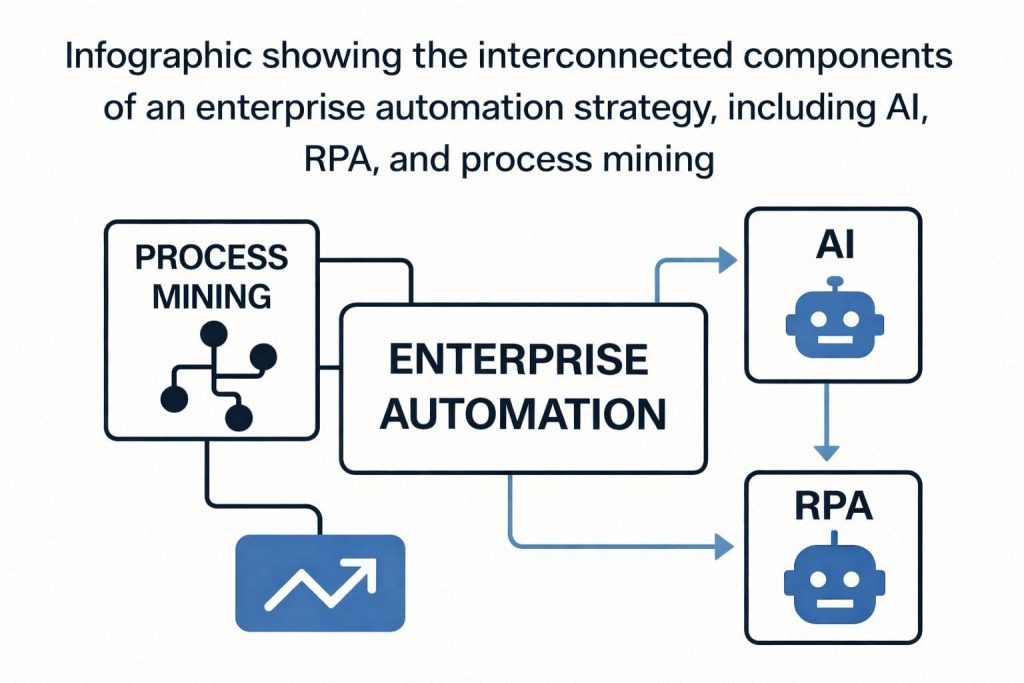
Chart Graphique visualizing the synergy of different automation technologies.
Common pitfalls to avoid when measuring hyperautomation ROI SaaS
You can run into problems. Be aware of these common traps. They can skew your Hyperautomation ROI SaaS numbers.
- ignoring indirect benefits: Don’t just focus on cost savings. Consider improved morale. Think about better data quality. These contribute to Hyperautomation ROI SaaS too.
- poor baseline data: If your initial measurements are bad, your ROI will be too. Invest time in accurate baselining. Process mining helps immensely here.
- lack of continuous monitoring: ROI isn’t a one-time calculation. Keep tracking performance. Adjust your strategy as needed.
- underestimating change management: People resist change. Involve your teams early. Train them on new processes. This ensures smooth adoption. It protects your Hyperautomation ROI SaaS.
Looking ahead: future of hyperautomation ROI SaaS
Hyperautomation will only grow more sophisticated. AI-driven automation will become even smarter. Low-code/no-code development will be standard. Measuring Hyperautomation ROI SaaS will evolve too. New metrics will emerge. Focus on adaptability. Stay updated on new tools and techniques. This ensures your enterprise automation strategy remains effective.
You’ve learned how to measure Hyperautomation ROI SaaS. You’ve seen the success stories. Now it’s your turn to act. Start small. Measure everything. Scale your efforts. This is how you achieve real digital transformation for businesses. For more in-depth knowledge on this topic, check out our ultimate guide to hyperautomation for SaaS The ultimate guide to hyperautomation for SaaS: integrating AI, RPA, and no-code workflows. You’ll find everything you need there.

PhD researcher & computer science lecturer (AI & automation)
AI tools + smart workflows to help freelancers & SaaS companies scale
Digital marketing & media buying specialist (data-driven growth)