Best practices for implementing hyperautomation in SaaS companies
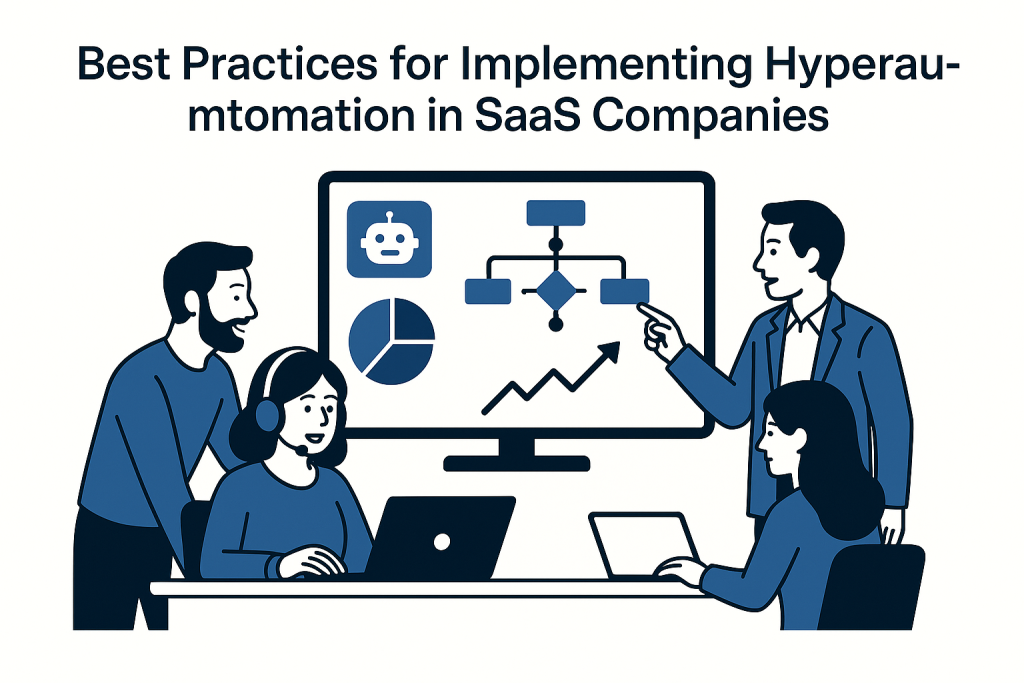
Implementing Hyperautomation SaaS is a game-changer for modern businesses. It’s not just a buzzword. This approach blends AI, machine learning, RPA, and low-code tools. It helps SaaS companies automate processes end-to-end. You can drive efficiency and cut costs significantly. This strategy is vital for staying competitive. It helps you serve your customers better. We’ll explore the best ways to make this happen.
Why implementing hyperautomation saas is crucial
Hyperautomation brings huge benefits to SaaS companies. It streamlines complex operations. This means less manual work and fewer errors. You get faster service delivery. Your teams can focus on innovation. This is a big win for your business.
Think about your current processes. Many are probably manual or siloed. Hyperautomation connects these dots. It uses `AI-driven automation` to make smart decisions. This leads to a truly `digital transformation for businesses`. It’s about more than just automating tasks. It’s about changing how your entire company operates.

Chart showing hyperautomation adoption trends and benefits.
Implementing Hyperautomation SaaS means better resource allocation. You’ll see a real impact on your bottom line. It also improves customer satisfaction. That’s because your services become more reliable.
Start with a clear enterprise automation strategy
You can’t just jump into implementing Hyperautomation SaaS. You need a solid plan. Your `enterprise automation strategy` must be clear. What problems are you trying to solve? What are your key business goals?
Start by mapping your current processes. This is where `process mining` comes in handy. It helps you see bottlenecks. You’ll find areas ripe for automation. Don’t guess; let the data guide you.
Prioritize processes that offer the biggest return. Look for repetitive, high-volume tasks. These are perfect candidates for automation. A phased approach works best. Don’t try to automate everything at once. This makes implementing Hyperautomation SaaS manageable.
Build a strong foundation with low-code/no-code development
`Low-code/No-code development` platforms are essential. They empower your teams. Even non-developers can build powerful automations. This speeds up your implementation. It democratizes development across your organization.
These tools reduce reliance on IT. They allow for rapid prototyping. You can test and refine solutions quickly. This agility is key for implementing Hyperautomation SaaS effectively. It helps you adapt fast.
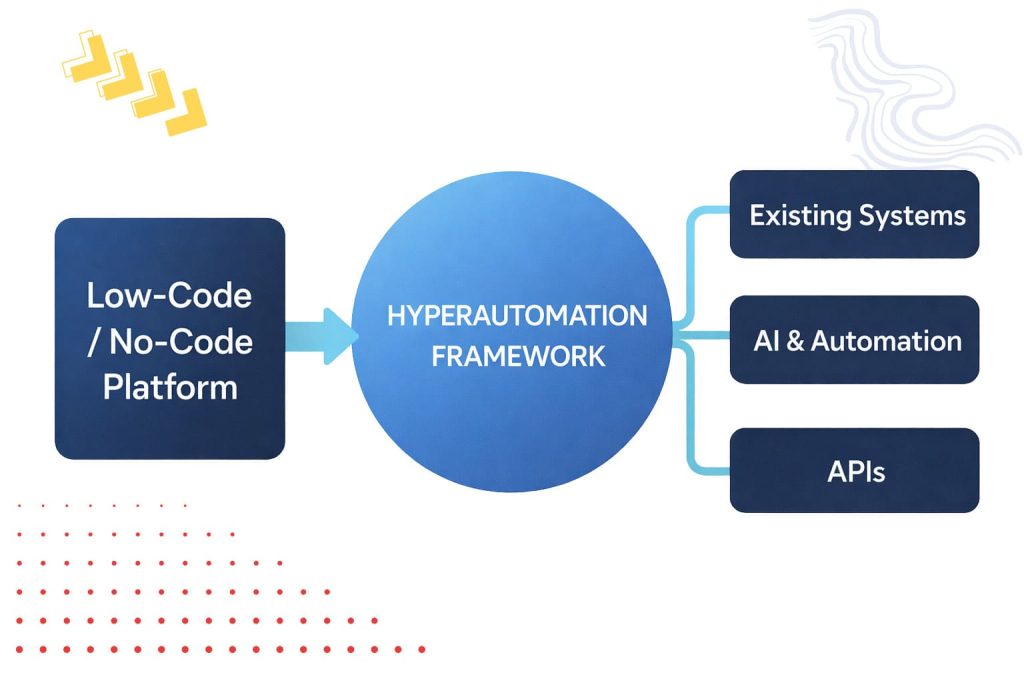
Diagram showing how low-code/no-code tools integrate with existing systems.
Using low-code/no-code doesn’t mean sacrificing quality. Many platforms offer robust security. They provide governance features too. This ensures your automations are secure and compliant. It’s a smart move for implementing Hyperautomation SaaS.
Integrate ai-driven automation wisely
`AI-driven automation` is the brain of hyperautomation. It adds intelligence to your workflows. AI can learn from data. It makes predictions and decisions. This goes beyond simple rule-based automation.
Think about customer support. AI chatbots can handle routine queries. This frees up your human agents. AI can also analyze customer data. It helps personalize experiences. This improves engagement significantly.
For internal operations, AI can optimize resource scheduling. It can predict maintenance needs. This proactive approach saves time and money. Implementing Hyperautomation SaaS with AI makes your systems smarter. It continuously improves processes.
Focus on change management and governance for implementing hyperautomation SaaS
Technology is only half the battle. People are crucial for success. Change management is non-negotiable. Your employees need to understand the benefits. They need training and support.
Communicate openly about the changes. Address concerns proactively. Show how hyperautomation helps them. It’s about augmenting human capabilities. It’s not about replacing jobs. This fosters adoption and reduces resistance.
Governance is also vital. Establish clear guidelines for automation development. Define roles and responsibilities. Who owns what? How will you maintain these systems? A strong governance framework ensures security. It maintains compliance. This makes implementing Hyperautomation SaaS sustainable.
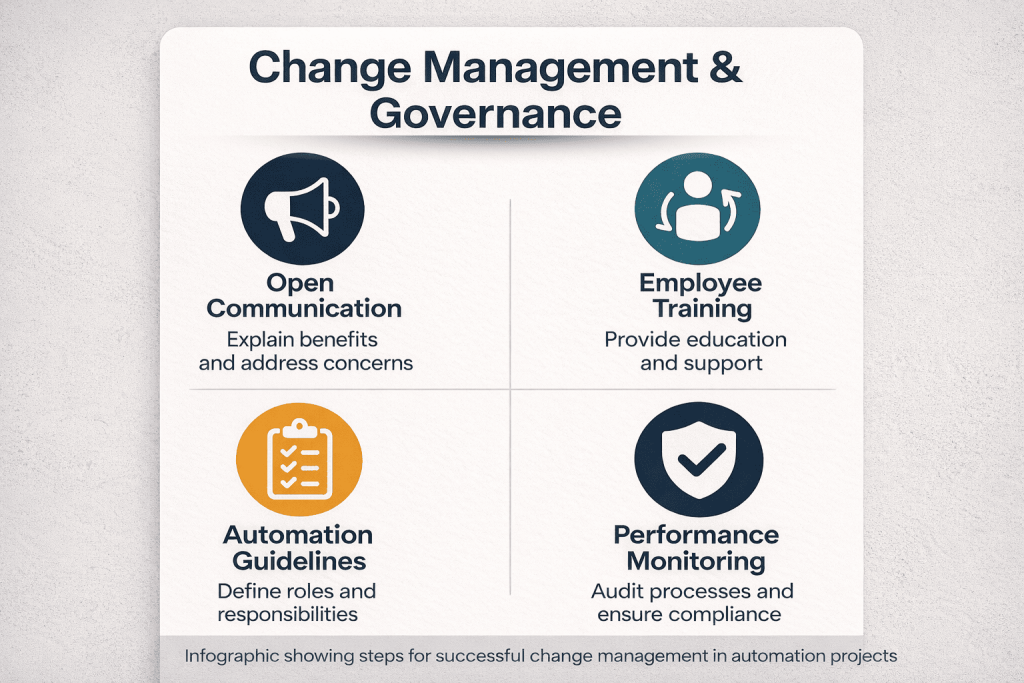
Infographic detailing steps for effective change management in automation.
You need to monitor performance closely. Regularly audit your automated processes. This helps identify any issues. It ensures they are still effective. This careful oversight is part of successful implementing Hyperautomation SaaS.
Measure, optimize, and scale your hyperautomation efforts
You’ve started implementing Hyperautomation SaaS. Now, you need to measure its impact. What are your key performance indicators (KPIs)? Are you seeing the expected cost savings? Is efficiency improving?
Use data to track your progress. Identify what’s working well. Find areas that need adjustment. Hyperautomation is an iterative process. You’ll continuously refine your automations. This ensures ongoing optimization.
Once an automation proves successful, scale it up. Apply it to other relevant areas. Share best practices across teams. This maximizes your investment. It helps you get the most from implementing Hyperautomation SaaS.
Remember, this is a journey. It’s about continuous improvement. Your `digital transformation for businesses` will evolve. Keep learning and adapting.
Implementing Hyperautomation SaaS is a powerful move. It transforms operations. It boosts efficiency. It sets your SaaS company up for future success. For a deeper dive into the broader aspects, check out our ultimate guide: The Ultimate Guide to Hyperautomation for SaaS: Integrating AI, RPA, and No-Code Workflows). You’ll find even more insights there.

PhD researcher & computer science lecturer (AI & automation)
AI tools + smart workflows to help freelancers & SaaS companies scale
Digital marketing & media buying specialist (data-driven growth)