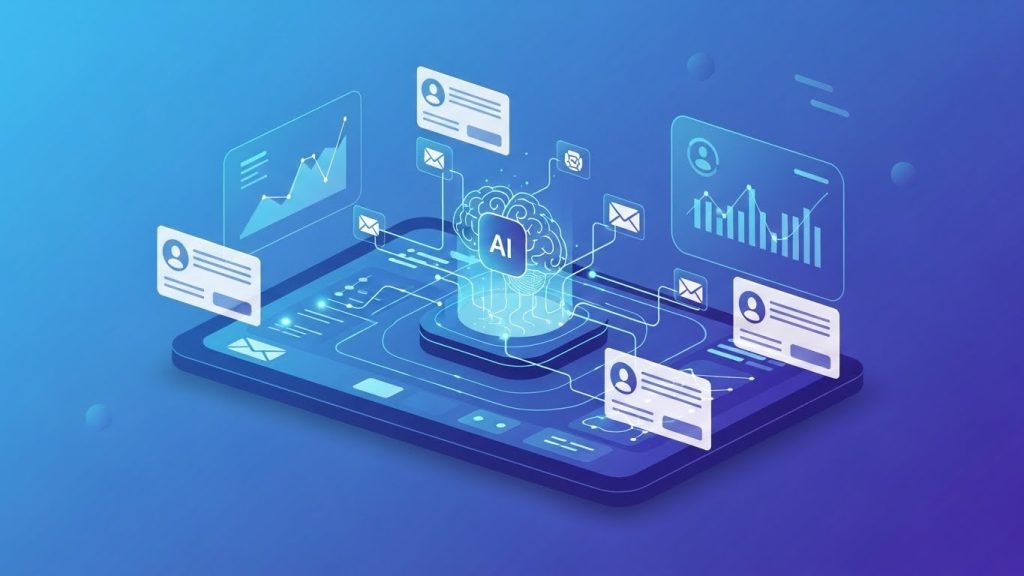
Customer relationship management has evolved dramatically with artificial intelligence transforming how businesses interact with customers and manage communications. AI-powered CRM systems and email automation tools now deliver predictive insights, hyper-personalization, and autonomous workflows that scale operations while maintaining the human touch customers expect.
What is AI-Powered CRM?
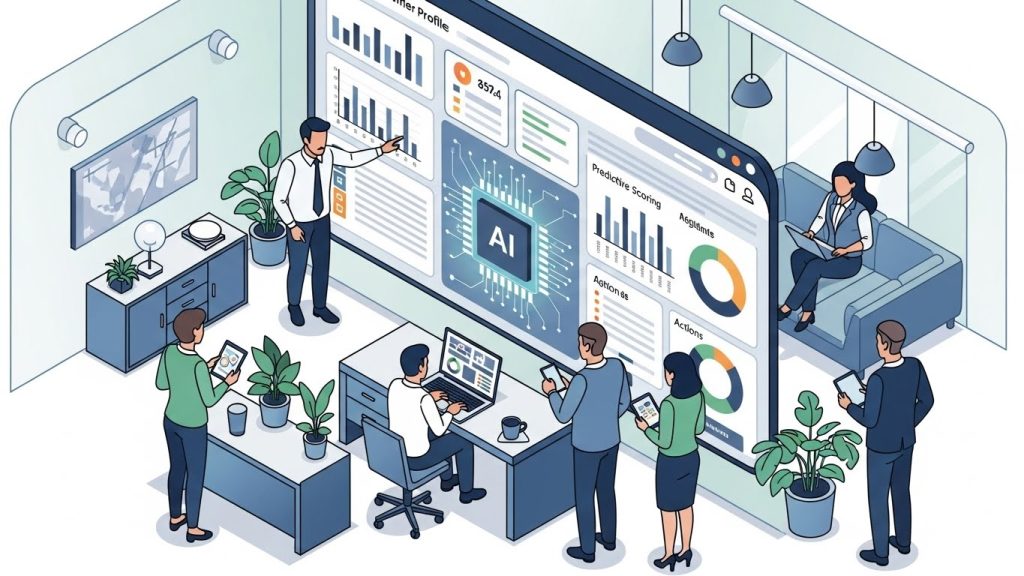
AI-powered CRM integrates artificial intelligence capabilities into traditional customer relationship management platforms to automate tasks, predict customer behavior, and deliver data-driven insights. These systems use machine learning algorithms, natural language processing, and predictive analytics to analyze vast amounts of customer data and identify patterns that humans might miss.
Modern AI CRM platforms go beyond simple contact management by offering intelligent features like automated data entry, predictive lead scoring, conversation intelligence, and AI-generated content assistance. The technology enables businesses to anticipate customer needs, personalize interactions at scale, and make strategic decisions based on accurate forecasting.
Key AI CRM Features Transforming Business in 2025
Predictive Lead Scoring
AI algorithms automatically identify which leads are most likely to convert based on historical data and behavioral patterns. The system continuously improves accuracy as more data becomes available, eliminating manual setup and guesswork from the sales process.
Automated Data Capture and Entry
Advanced AI systems automatically collect and input customer information into the CRM, reducing manual labor by up to 80%. Einstein Activity Capture, for example, logs emails and calendar events automatically while ensuring complete activity records.
Conversational AI and Chatbots
AI-powered chatbots and virtual assistants handle routine customer inquiries without human intervention, providing instant personalized responses 24/7. These tools enhance customer service efficiency while freeing human agents for complex issues requiring emotional intelligence.
Natural Language Processing (NLP)
NLP capabilities interpret and understand customer inquiries, enabling more effective communication and sentiment analysis. This technology allows CRM systems to categorize emails by intent, urgency, and emotional tone automatically.
AI-Driven Sales Forecasting
Machine learning models provide accurate predictions about sales trends and revenue projections. Companies like T-Mobile and American Express report significant improvements in forecast accuracy after implementing AI forecasting capabilities.
Top AI-Powered CRM Platforms for 2025
Salesforce Sales Cloud
Best for enterprise-level customization, Salesforce remains the market leader with Einstein AI delivering industry-leading capabilities. The platform offers AI-driven sales insights, customizable workflows, and extensive third-party integrations.
HubSpot CRM
Ideal for aligning marketing and sales teams, HubSpot provides intuitive user experience with predictive lead scoring and content assistant features. The platform includes conversation intelligence that analyzes sales calls to identify successful patterns.
Microsoft Dynamics 365 Sales
Perfect for businesses deeply integrated with Microsoft products, this platform offers seamless connectivity with Office 365 and Azure services. The system provides comprehensive AI insights across customer touchpoints.
Freshsales
Designed for AI-driven lead management, Freshsales delivers built-in email and phone integrations with smart workflow automation. The platform excels at helping businesses engage leads effectively through automated scoring.
AI Email Automation: The Complete Strategy
AI email automation represents the next evolution in customer communication, enabling businesses to send personalized messages at scale while maintaining relevance and timing. Modern platforms use machine learning to optimize send times, subject lines, and content based on individual recipient behavior.
Benefits of AI Email Processing
- Time Savings: Automate repetitive tasks like sorting, categorizing, and data entry
- Improved Efficiency: Faster response times with consistent handling of inquiries
- Enhanced Accuracy: AI reduces human error in data extraction and routing
- Better Prioritization: Automatically identify high-priority emails requiring immediate attention
- Scalability: Handle increasing volumes without additional staff
Essential AI Email Automation Features
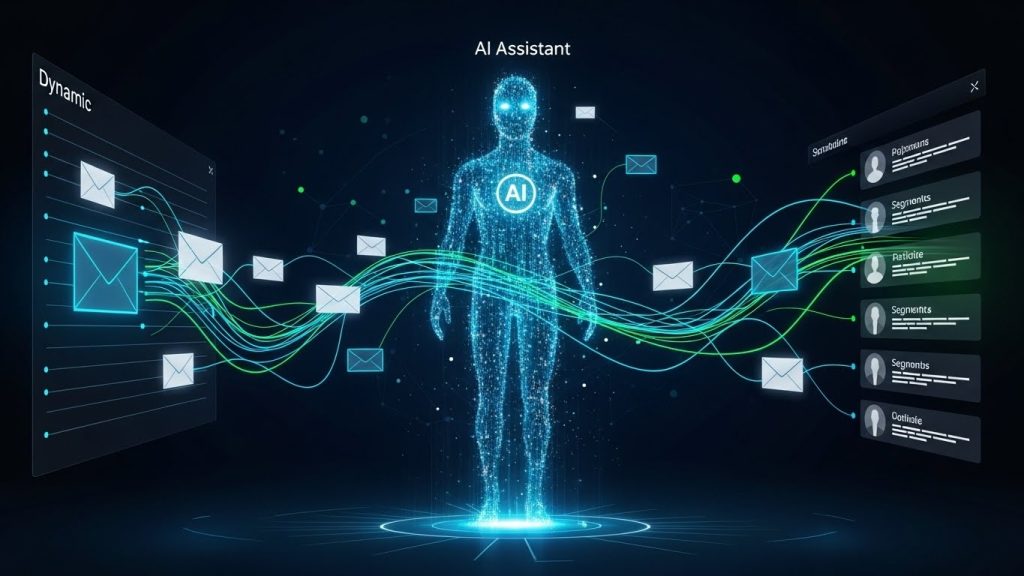
Smart Reply Technology generates AI-powered response suggestions tailored to your communication style and conversation context. Users can edit, personalize, and send replies in seconds, reducing composition time by 35-80%.
Behavior-Based Triggers allow personalization based on user actions, with advanced platforms offering over 50 trigger options. E-commerce businesses can automate abandoned cart sequences, product view follow-ups, and purchase confirmations.
AI Content Generation helps create marketing copy, email subject lines, and blog content tailored to specific audiences and campaigns. These tools ensure consistency while adapting messaging for different customer segments.
CRM Integration Best Practices
Define Clear Objectives
Start by setting measurable goals for your CRM integration, whether improving lead-to-close rates, reducing support response times, or gaining better reporting visibility. Tie each integration to specific business priorities to measure ROI effectively.
Choose Compatible Tools
Look for native integrations or robust APIs that ensure seamless data exchange between systems. Salesforce and HubSpot offer pre-built integrations with major marketing, sales, and support tools, minimizing custom development needs.
Ensure Proper Data Mapping
Map fields between systems carefully to prevent data loss or duplication. Standardize formats for dates, currency, and naming conventions to improve reporting accuracy and establish clear rules for handling duplicate records.
Invest in Training and Adoption
Train employees on how integrated systems work together and promote cross-functional collaboration. Offer real-world use cases demonstrating how integration improves daily workflows to increase user buy-in.
AI Customer Segmentation for Personalization
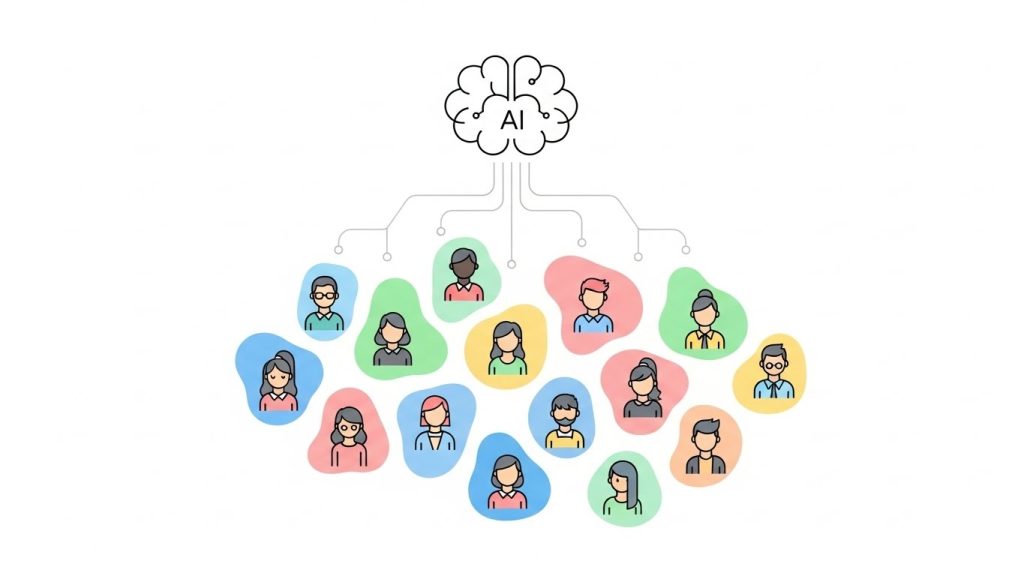
AI enables micro-segmentation by creating highly specific customer groups based on subtle behavioral cues. Unlike traditional demographic segmentation, AI analyzes behavioral patterns and preferences to create granular customer profiles that constantly adapt to new data.
Dynamic segmentation adjusts in real-time as customer behaviors change, ensuring marketing insights remain current without quarterly review cycles. This capability allows businesses to target individuals rather than broad demographics, significantly increasing engagement and satisfaction.m1-project+1
Measuring Success: Key Metrics
Track customer acquisition cost (CAC), customer lifetime value (CLV), and churn rate through integrated analytics dashboards. Blend CRM data with financial and behavioral metrics to measure campaign effectiveness and identify optimization opportunities.
Monitor first contact resolution (FCR) rates and average handling time (AHT) to assess automation impact on customer service efficiency. Leading implementations report AHT reductions of up to 80% while maintaining high satisfaction scores.
The Future of AI CRM and Email Automation
The convergence of AI agents with CRM platforms represents the next frontier, enabling autonomous actions that amplify human capabilities. These digital workers handle routine tasks while providing intelligence for strategic decisions, creating powerful combinations of human expertise and AI efficiency.
Predictive analytics will continue advancing, allowing businesses to anticipate market changes and customer needs with increasing accuracy. Organizations that embrace these technologies now position themselves to deliver exceptional customer experiences while optimizing operational costs and scaling intelligently.

A.G. Makoudi is a tech writer specializing in SaaS tools and digital solutions, helping readers simplify technology and make smarter software choices.