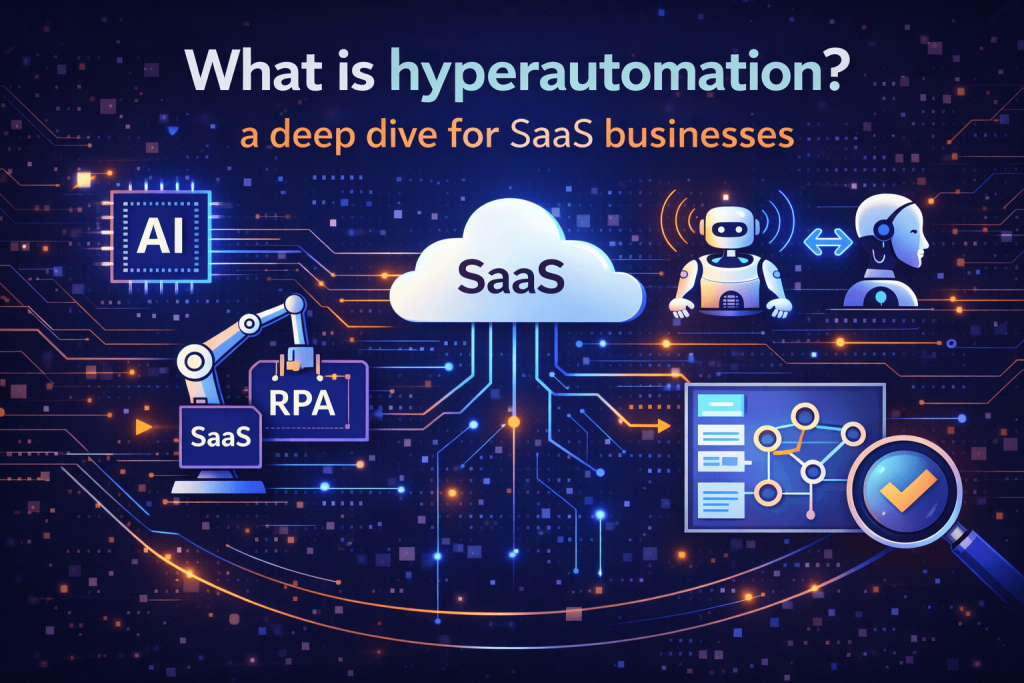
Integrating AI into SaaS workflows for enhanced hyperautomation

You need to get serious about AI Integration SaaS Automation. It’s not just a buzzword anymore. It’s how leading businesses stay ahead. Integrating AI into your SaaS workflows changes everything. You can automate more tasks. You can make better decisions faster. This is about real, tangible improvements for your operations. We’re talking about a significant leap forward. Your competitors are already looking at this. You can’t afford to be left behind. This guide shows you exactly how to make it happen. You’ll see the clear path to enhanced hyperautomation.
Why AI integration SaaS automation matters right now
The world moves fast. Your business needs to move even faster. That’s where AI Integration SaaS Automation comes in. It’s about making your software smarter. It’s about making your processes automatic. You get to cut down on manual work. This frees up your team for bigger projects. Think about reducing errors. Imagine boosting your overall efficiency. This isn’t just a small tweak. It’s a complete overhaul of how you operate.
This strategy is vital for modern SaaS companies. You can’t rely on old methods. New challenges demand new solutions. AI Integration SaaS Automation provides those solutions. It drives real digital transformation for businesses. It helps you stay competitive. You deliver more value to your customers. That’s a win-win situation every time.

A line chart showing the positive impact of AI integration on efficiency and cost reduction.
Identifying opportunities for AI integration SaaS automation
You can’t just throw AI at everything. You need a smart plan. First, find your biggest pain points. Where do your workflows slow down? What tasks are repetitive and error-prone? These are prime targets for AI-driven automation.
Look at your customer support. AI can handle common queries. It can route complex issues. Consider your data analysis. AI can spot trends you might miss. This makes your decisions data-driven. It’s about working smarter, not harder.
Process mining: your first step
Before you automate, understand your processes. Process mining tools are essential here. They map out your current workflows. They show you bottlenecks and inefficiencies. You can see exactly where AI will have the most impact. This step is non-negotiable. Without it, you’re just guessing. Effective AI Integration SaaS Automation needs clear data.
Building your enterprise automation strategy
You need a clear roadmap. Don’t just implement tools piecemeal. Develop a strong enterprise automation strategy. This strategy outlines your goals. It defines how AI will fit into your existing systems. It ensures all your efforts align.
Think about scalability from day one. Your AI solutions should grow with you. This prevents future headaches. It makes your AI Integration SaaS Automation efforts sustainable. A good strategy is your foundation.
Choosing the right tools for ai integration saas automation
The market is full of AI tools. You need to pick wisely. Look for tools that integrate easily. They should play nice with your existing SaaS stack. Consider their capabilities. Do they meet your specific automation needs?
Many platforms offer Low-code/No-code development options. These are huge. They let your citizen developers build solutions. You don’t need a massive team of AI experts. This speeds up implementation. It makes AI Integration SaaS Automation more accessible.
Actionable steps for implementing AI integration SaaS automation
Ready to get started? Here are the practical steps. Follow them closely for the best results.
Step 1: define clear objectives
What do you want to achieve? Is it cost reduction? Improved customer experience? Set specific, measurable goals. This guides your AI Integration SaaS Automation efforts. Clear objectives mean clear success metrics.
Step 2: assess current workflows with process mining
As we discussed, process mining is key. Use tools to visualize your workflows. Identify areas ripe for AI intervention. Where can AI provide the most value? This data-driven approach is critical.
Step 3: pilot small-scale ai projects
Don’t go all-in at once. Start with small, manageable projects. Test the waters. Learn what works and what doesn’t. This minimizes risk. It builds confidence in AI Integration SaaS Automation.
Step 4: leverage low-code/no-code platforms
Empower your team. Use Low-code/No-code development platforms. They allow faster development cycles. Your business users can contribute directly. This accelerates your AI Integration SaaS Automation rollout.
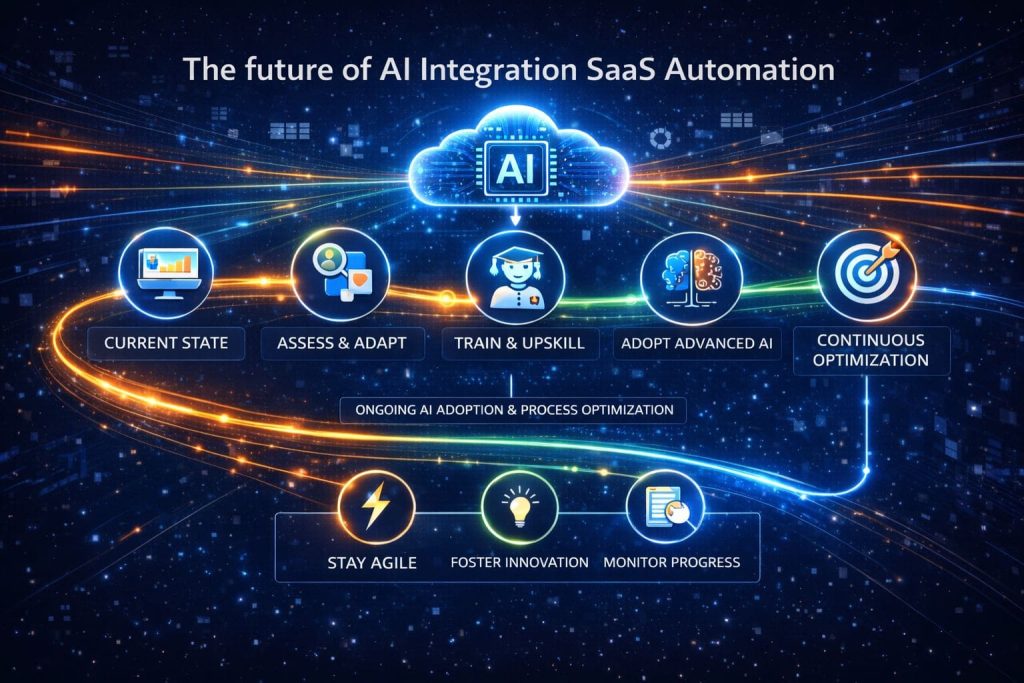
A flowchart illustrating the stages of integrating AI into SaaS applications.
Step 5: integrate ai with existing saas solutions
Your AI tools shouldn’t stand alone. They need to talk to your existing SaaS. Use APIs and connectors. Ensure seamless data flow. This creates truly automated workflows. This is the essence of AI Integration SaaS Automation.
Step 6: monitor, analyze, and optimize
Implementation isn’t the end. Continuously monitor your AI-driven automation. Are you hitting your goals? What can be improved? AI models need tuning. Your workflows need optimization. This iterative process ensures long-term success.
The bigger picture: hyperautomation and digital transformation for businesses
AI Integration SaaS Automation is a big piece of a larger puzzle. It’s a core component of hyperautomation. Hyperautomation brings together AI, RPA, and low-code. It creates end-to-end automation. You get smarter, more agile operations.
This is what digital transformation for businesses looks like. It’s not just about new tech. It’s about changing how you work. It’s about creating a truly automated enterprise. This makes your business more resilient. It makes it more competitive.
For a deeper dive into this entire concept, you should check out our main guide on “The Ultimate Guide to Hyperautomation for SaaS: Integrating AI, RPA, and No-Code Workflows” The ultimate guide to hyperautomation for SaaS: integrating AI, RPA, and no-code workflows. It covers all the angles. You’ll get the full picture there.
Common pitfalls to avoid in ai integration saas automation
It’s not always smooth sailing. Be aware of common mistakes.
Neglecting data quality
AI thrives on good data. Bad data leads to bad outcomes. Invest in data cleansing. Ensure your data is accurate and consistent. Poor data quality will derail your AI Integration SaaS Automation efforts.
Ignoring change management
People don’t like change. Your team needs to be on board. Communicate the benefits clearly. Provide adequate training. A smooth transition is crucial. Without it, adoption will suffer.
Siloed implementations
Don’t let AI projects exist in isolation. They need to connect. They need to contribute to your overall enterprise automation strategy. Silos defeat the purpose of integrated automation.
Lack of clear roi metrics
How will you measure success? Define your return on investment upfront. Track your metrics. Prove the value of your AI Integration SaaS Automation. This justifies future investments.
The future of ai integration saas automation
The journey doesn’t stop. AI capabilities are evolving fast. Expect more sophisticated models. Expect easier integration options. Your AI Integration SaaS Automation strategy needs to be flexible. It needs to adapt.
Embrace continuous learning. Stay updated on new AI trends. Look for new ways to automate. This keeps your business at the forefront. It ensures your digital transformation for businesses continues.
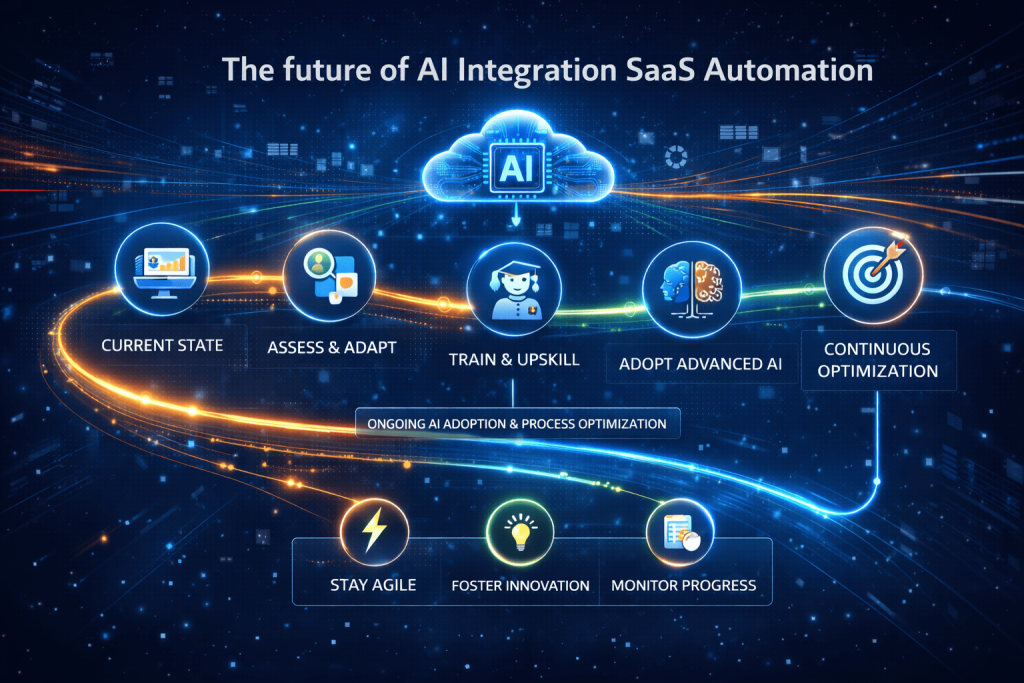
An infographic illustrating a strategic roadmap for ongoing AI adoption and process optimization.
Wrapping it up
AI Integration SaaS Automation isn’t optional anymore. It’s a strategic imperative. You need to embrace AI-driven automation. You need to leverage Low-code/No-code development. Understand your processes with process mining. Build a solid enterprise automation strategy. Drive true digital transformation for businesses.
Start small. Think big. Stay agile. Your business will thank you for it. This is how you win in today’s market. You automate. You innovate. You thrive.

PhD researcher & computer science lecturer (AI & automation)
AI tools + smart workflows to help freelancers & SaaS companies scale
Digital marketing & media buying specialist (data-driven growth)