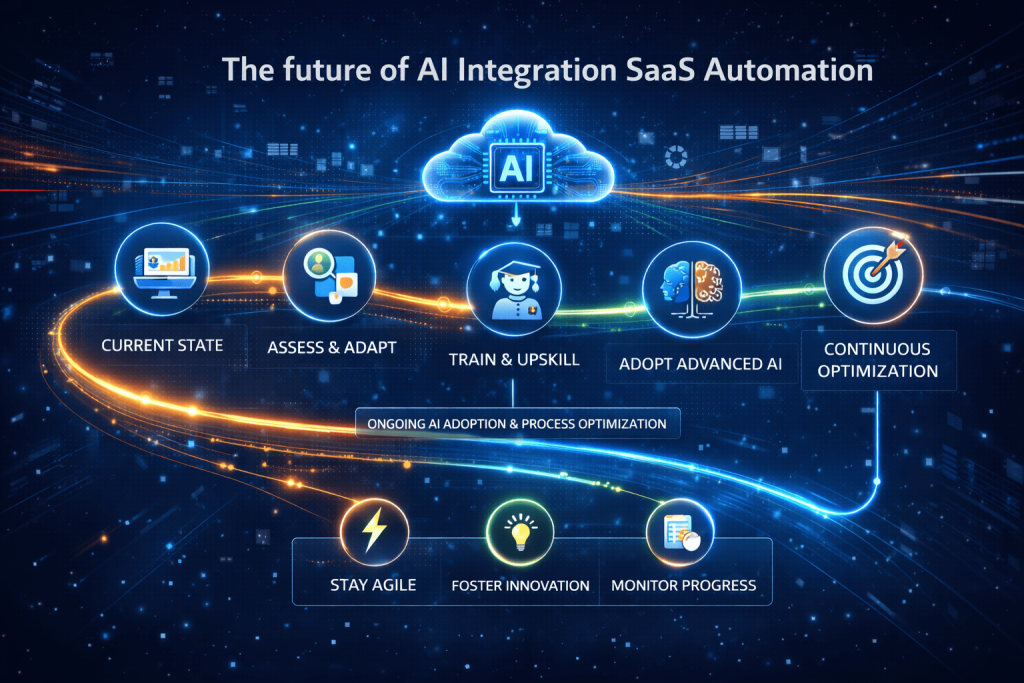
The ultimate guide to hyperautomation for SaaS: integrating AI, RPA, and no-code workflows

You’ve probably felt the pressure. Your SaaS business needs to move faster. You need to do more with less. This isn’t just about simple automation anymore. We’re talking about hyperautomation for SaaS. It’s about radically transforming how your business runs. You get to connect every process, every system, and every piece of data. This guide will show you how to truly achieve digital transformation for businesses by integrating AI, RPA, and no-code workflows. It’s a complete overhaul of your operational efficiency. You’ll see real results, faster than you think. Get ready to rethink everything you thought you knew about automation.
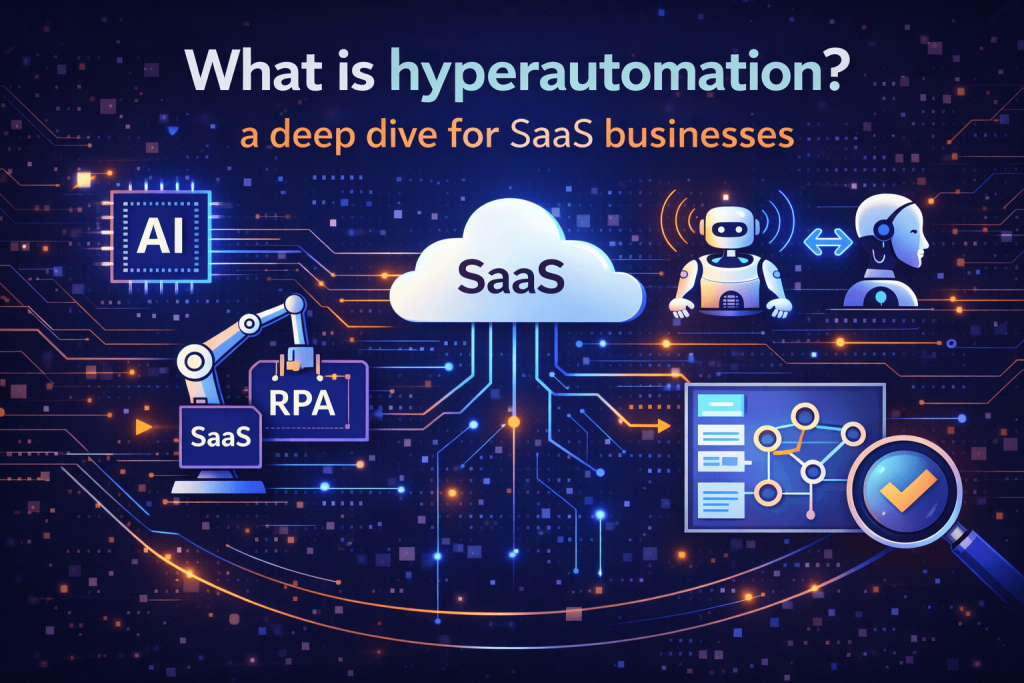
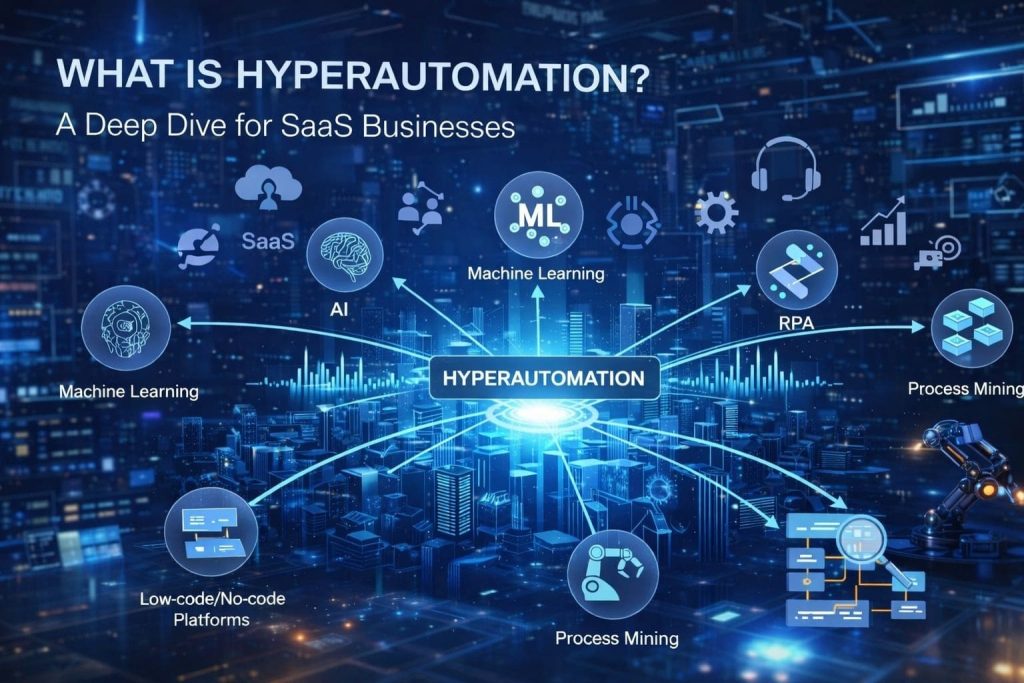
What is hyperautomation? a deep dive for SaaS businesses
Forget old-school automation. Hyperautomation for SaaS is a different beast. It’s not just automating one task. It’s about automating everything possible within your organization. This includes processes, tasks, and decisions. It combines multiple advanced technologies. Think artificial intelligence (AI), machine learning (ML), robotic process automation (RPA), and even low-code/no-code platforms. You use these tools together. This creates an end-to-end automation capability. It’s a huge step up for any SaaS company.
Why is this a big deal for SaaS? Your business thrives on efficiency. You need to onboard customers quickly. You must process data fast. You have to scale without breaking the bank. Hyperautomation for SaaS helps you do all of that. It connects the dots between disparate systems. It eliminates manual handoffs. This frees up your team for higher-value work. You can focus on innovation and customer experience. That’s a win-win for everyone involved.
Consider your customer support. A user submits a ticket. AI-driven automation can classify it. RPA can then pull relevant user data. A no-code workflow might trigger an automated response. If needed, it assigns it to the right agent. This entire process happens in seconds. That’s the power of hyperautomation for SaaS. It reduces response times dramatically. It also boosts customer satisfaction. You can see the immediate impact.
Process mining is key here too. Before you automate, you must understand your current processes. Process mining tools analyze your operational data. They map out how work actually flows. This uncovers bottlenecks and inefficiencies. You can’t optimize what you don’t understand. This step is crucial for effective hyperautomation for SaaS. It ensures you target the right areas for improvement. You won’t waste time automating broken processes. That’s a critical mistake many businesses make.
This approach is about more than just cost savings. It’s about agility. It’s about scalability. It’s about building a resilient organization. Hyperautomation for SaaS lets you adapt quickly to market changes. You can launch new features faster. You can expand into new markets with ease. This provides a significant competitive advantage. You stay ahead of the curve.
Think about the sheer volume of data in SaaS. Billing, user behavior, feature usage, support tickets. It’s overwhelming. Hyperautomation for SaaS helps you manage this data. It automates data entry and reconciliation. It ensures data accuracy across systems. This forms a solid foundation for better decision-making. Your insights become more reliable. You make smarter business choices.
Implementing an enterprise automation strategy is vital. It means looking at your entire business. You don’t just automate in silos. You create a cohesive plan. This plan guides your hyperautomation for SaaS journey. It ensures all efforts align with your business goals. A fragmented approach just won’t cut it. You need a unified vision.
Ultimately, hyperautomation for SaaS empowers your workforce. It takes away the tedious, repetitive tasks. Your employees can focus on creative problem-solving. They can build better products. They can deliver exceptional service. This leads to higher job satisfaction. It also drives innovation within your company. It’s about augmenting human capabilities, not replacing them.
Integrating AI into SaaS workflows for enhanced hyperautomation
AI is the brain behind hyperautomation for SaaS. It brings intelligence to your automated processes. AI allows systems to learn and adapt. It makes decisions based on data. This goes way beyond simple rule-based automation. You get smarter, more flexible workflows. This is essential for complex SaaS operations.
Consider data analysis in your SaaS product. AI can process vast amounts of user data. It identifies trends and patterns. It predicts user churn. It suggests personalized features. This AI-driven automation enhances customer experience. It also informs product development. Your product gets better, faster. That’s a direct benefit of hyperautomation for SaaS.
For marketing, AI can personalize campaigns. It optimizes ad spend. It identifies high-value leads. This improves your conversion rates. It makes your marketing efforts more effective. Hyperautomation for SaaS with AI means smarter growth. You reach the right customers at the right time.
In finance, AI can automate fraud detection. It streamlines invoice processing. It helps with financial forecasting. This reduces errors and saves time. It also strengthens your financial security. AI-driven automation makes your financial operations robust. It’s a key component of hyperautomation for SaaS.
You can use AI for natural language processing (NLP). This helps with customer support. Chatbots can handle common queries. They understand user intent. They provide instant solutions. This frees up human agents. They can focus on complex issues. This is a powerful aspect of hyperautomation for SaaS. It improves service quality.
AI also plays a role in intelligent document processing (IDP). Many SaaS businesses deal with contracts. They handle agreements and forms. AI can extract data from these documents. It automates data entry into your systems. This eliminates manual errors. It speeds up onboarding and compliance. This is another layer of hyperautomation for SaaS.
Building an enterprise automation strategy must include AI. You need to identify where AI can add the most value. Don’t just throw AI at every problem. Be strategic about its implementation. Focus on areas with high data volume. Look for tasks requiring complex decision-making. This maximizes your return on investment.
Think about your development pipeline. AI can assist with code reviews. It can identify bugs earlier. It can even suggest code improvements. This accelerates your development cycles. It improves code quality. This is a less obvious but powerful use of AI-driven automation in SaaS. It contributes to overall hyperautomation for SaaS.
The goal is to create truly intelligent workflows. These workflows learn from experience. They get better over time. They adapt to new situations. This makes your SaaS operations incredibly resilient. It sets you up for long-term success. Hyperautomation for SaaS isn’t just a trend. It’s the future of operational excellence.
Leveraging robotic process automation (RPA) in saas hyperautomation strategies
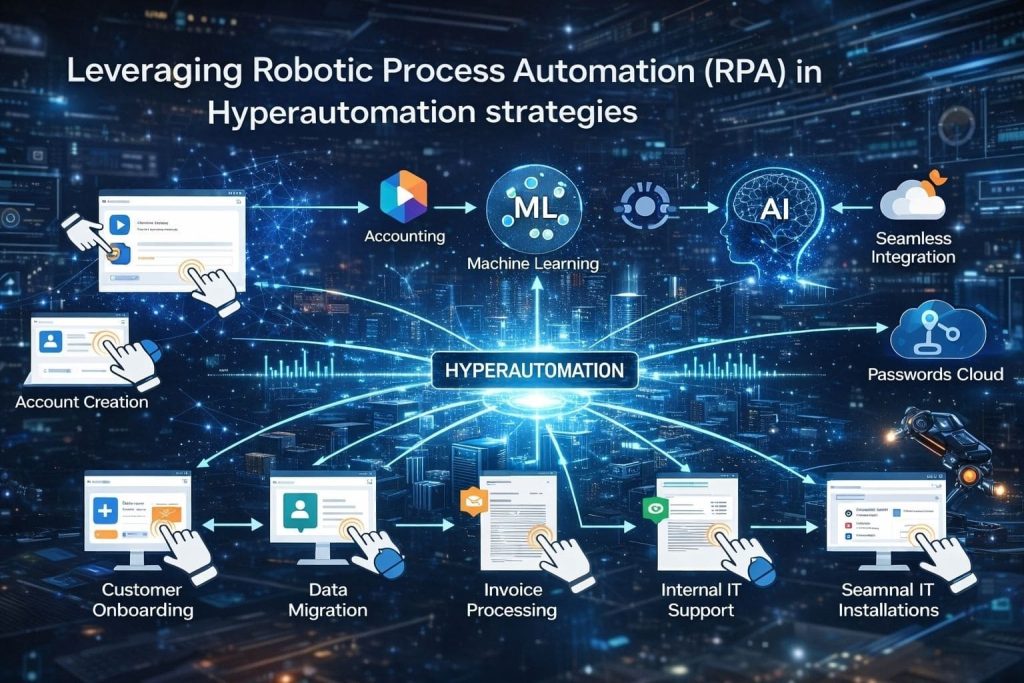
Robotic Process Automation, or RPA, is the workhorse of hyperautomation for SaaS. While AI provides the brains, RPA provides the hands. RPA bots mimic human actions. They interact with applications just like a human user would. They click buttons. They enter data. They copy and paste information. They do all this at lightning speed. And they never get tired.
For SaaS companies, RPA is a game-changer. Think about customer onboarding. You need to create accounts. You must update CRM records. You have to send welcome emails. These are often repetitive tasks. RPA can automate all of them. This speeds up onboarding significantly. It ensures a consistent experience. This is vital for hyperautomation for SaaS.
Another area is data migration. Moving data between systems is painful. It’s prone to human error. RPA bots can handle this flawlessly. They transfer data accurately and quickly. This saves countless hours. It reduces the risk of costly mistakes. This makes your hyperautomation for SaaS efforts more robust.
Invoice processing is another prime candidate. RPA can read invoices. It extracts key information. It enters data into your accounting system. It matches invoices to purchase orders. This streamlines your accounts payable. It ensures timely payments. It’s a perfect example of AI-driven automation combined with RPA.
Consider your internal IT support. Many requests are routine. Password resets, access requests, software installations. RPA can automate these tasks. This frees up your IT team. They can focus on more complex issues. This improves internal efficiency. It’s a clear win for hyperautomation for SaaS.
RPA integrates seamlessly with existing systems. You don’t need to rip and replace. This is a huge advantage. It works with legacy applications. It works with modern cloud services. This makes implementation easier. It reduces disruption to your operations. This flexibility is key for hyperautomation for SaaS.
When planning your enterprise automation strategy, identify high-volume, repetitive tasks. Look for processes that are rule-based. These are ideal for RPA. Don’t try to automate every single thing at once. Start small. Show quick wins. Then expand your RPA footprint. This builds momentum for hyperautomation for SaaS.
RPA also helps with compliance. It creates an audit trail for every action. This ensures transparency. It helps meet regulatory requirements. You can easily track what bots are doing. This is critical for many SaaS businesses. It adds another layer of security and accountability. This is a crucial aspect of hyperautomation for SaaS.
Combining RPA with AI unlocks even more power. RPA can collect data. AI can then analyze it. AI can make a decision. RPA can then execute that decision. This creates intelligent process automation. It’s a core component of advanced hyperautomation for SaaS. You get the best of both worlds.
Remember, RPA isn’t just for big enterprises. SaaS companies of all sizes can benefit. It scales easily. You can add more bots as needed. This supports your growth. It ensures your operations keep pace. This makes hyperautomation for SaaS a viable strategy for everyone.
No-code and low-code workflows: accelerating hyperautomation in SaaS
No-code and low-code platforms are the democratizers of hyperautomation for SaaS. They empower citizen developers. These are business users, not traditional programmers. They can build applications and automate workflows. They do this without writing complex code. This accelerates your automation efforts dramatically.
Think about your marketing team. They need a new lead nurturing workflow. Traditionally, they’d wait for IT. With low-code/no-code, they can build it themselves. They use visual drag-and-drop interfaces. They connect different tools. This speeds up implementation. It makes the team more agile. This is powerful for hyperautomation for SaaS.
For product managers, these platforms are invaluable. They can quickly prototype new features. They can build internal tools. They can test new ideas without heavy development cycles. This reduces time-to-market. It fosters innovation. Low-code/No-code development is a catalyst for hyperautomation for SaaS.
Customer service teams can create custom dashboards. They can build automated escalation paths. They can integrate disparate communication channels. All without touching a single line of code. This improves service quality. It makes agents more efficient. It’s a direct benefit of hyperautomation for SaaS.
These platforms bridge the gap between business and IT. Business users understand their processes best. They can now directly implement solutions. This reduces miscommunication. It speeds up project delivery. It makes digital transformation for businesses more accessible.
Low-code/No-code development allows for rapid iteration. You can build a workflow. You can test it. You can refine it quickly. This agile approach is perfect for hyperautomation for SaaS. You adapt to changing needs faster. You don’t get stuck in long development cycles.
Consider integrating different SaaS applications. You use Salesforce, HubSpot, Zendesk. Getting them to talk can be tricky. No-code integration platforms make it easy. You visually map data. You define triggers and actions. This creates seamless data flow. This is crucial for hyperautomation for SaaS.
When developing your enterprise automation strategy, factor in no-code/low-code. Empower your business units. Give them the tools to automate. Provide governance and training. This ensures they build robust solutions. It prevents shadow IT issues. This is a smart way to scale hyperautomation for SaaS.
No-code platforms aren’t just for simple tasks. Many offer advanced capabilities. You can build complex business logic. You can integrate with AI and RPA. This creates a powerful synergy. It truly accelerates your hyperautomation for SaaS journey. You get sophisticated automation without the coding headache.
The rise of citizen developers is real. They are a valuable resource. By enabling them, you unlock massive potential. You decentralize automation efforts. You make your organization more responsive. This is the essence of modern digital transformation for businesses. It’s about leveraging all your talent.
Best practices for implementing hyperautomation in SaaS companies
Implementing hyperautomation for SaaS isn’t a one-time project. It’s a journey. You need a structured approach. Here are some best practices to guide you. These will help you achieve success.
1. Start with a Clear Strategy: Don
‘t just automate for automation’s sake. Define your goals. What problems are you solving? What business outcomes do you want? Is it cost reduction? Improved customer experience? Faster time-to-market? Your enterprise automation strategy must align with business objectives. This is foundational for hyperautomation for SaaS.
2. Embrace Process Mining: You can’t optimize what you don’t understand. Use process mining tools. They visualize your current workflows. They identify bottlenecks and inefficiencies. This data-driven approach ensures you automate the right processes. It prevents automating broken ones. This step is non-negotiable for effective hyperautomation for SaaS.
3. Prioritize High-Impact Areas: Don’t try to automate everything at once. Identify processes with the highest potential ROI. Look for high-volume, repetitive tasks. Target areas with significant manual effort. Focus on processes that impact customer experience. This builds momentum and shows quick wins. It validates your hyperautomation for SaaS investment.
4. Adopt a Phased Approach: Implement hyperautomation for SaaS incrementally. Start with pilot projects. Learn from them. Iterate and improve. Then scale across the organization. This reduces risk. It allows for continuous optimization. A big bang approach often fails.
5. Foster a Culture of Automation: Automation isn’t just an IT initiative. It’s a company-wide shift. Educate your employees. Show them how automation helps them. Address fears about job displacement. Empower citizen developers with Low-code/No-code development tools. This creates buy-in and accelerates adoption.
6. Invest in the Right Technologies: Choose tools that integrate well. Look for platforms that support AI, RPA, and no-code. Ensure they are scalable and secure. Don’t compromise on quality. The right tech stack is crucial for robust hyperautomation for SaaS.
7. Establish Governance and Standards: As you scale, you need rules. Define clear roles and responsibilities. Set up security protocols. Establish best practices for building and deploying automations. This ensures consistency and compliance. It prevents chaos as your hyperautomation for SaaS initiatives grow.
8. Measure and Monitor Performance: You need to track your results. Define KPIs before you start. Monitor the performance of your automations. Are they delivering the expected ROI? Are they improving efficiency? Use data to continually optimize your hyperautomation for SaaS efforts.
9. Continuously Learn and Adapt: The automation landscape evolves fast. Stay updated on new technologies. Learn from your successes and failures. Be willing to adapt your strategy. Hyperautomation for SaaS is an ongoing journey of improvement. You must keep pushing forward.
10. Integrate with Existing Systems: Your hyperautomation for SaaS solutions shouldn’t exist in a vacuum. Ensure they connect seamlessly with your CRM, ERP, and other critical systems. This creates a truly connected and efficient ecosystem. It maximizes the value of your automation.
Following these practices will put you on the right path. You’ll build a resilient and efficient SaaS business. This is how you truly achieve digital transformation for businesses. For more detailed insights on specific tools, check out our guide on Best practices for implementing hyperautomation in SaaS companies.
Top hyperautomation tools for SaaS
Choosing the right tools is critical for hyperautomation for SaaS. Here’s a look at some leading platforms. They offer different strengths for your enterprise automation strategy.
| Feature / Tool | UiPath | Microsoft Power Platform | Automation Anywhere | Zapier / Make (formerly Integromat) | Celonis |
|---|---|---|---|---|---|
| Core Focus | RPA, AI, Process Mining | Low-code/No-code, RPA, AI | RPA, AI, Process Mining | Workflow Automation, Integrations | Process Mining, Execution Management |
| Key Strengths | Enterprise-grade RPA, strong AI integration | Broad Microsoft ecosystem, citizen dev friendly | Cloud-native RPA, intelligent automation | Easy app integration, quick workflow creation | Deep process insights, optimization recommendations |
| AI Capabilities | Document Understanding, AI Center | AI Builder, Azure AI services | IQ Bot (document processing), AARI (AI assistant) | Limited native AI, integrates with AI tools | AI-powered process discovery, root cause analysis |
| No-Code/Low-Code | Apps, StudioX (low-code) | Power Apps, Power Automate (low-code/no-code) | AARI (low-code forms), Automation 360 (low-code) | Primarily no-code workflow builder | No-code process apps |
| Process Mining | Process Mining (acquired ProcessGold) | Process Advisor | Process Discovery | N/A (focus on workflow execution) | Core offering, industry leader |
| Best For | Large-scale RPA deployments, complex tasks | Microsoft-centric organizations, citizen developers | Cloud-first RPA, intelligent document processing | Small to medium businesses, quick integrations | Enterprises needing deep process optimization |
This table shows you the landscape. Each tool has its place in hyperautomation for SaaS. Your choice depends on your specific needs. It also depends on your existing tech stack.
Measuring roi of hyperautomation: success stories in SaaS
You need to prove the value of hyperautomation for SaaS. Measuring ROI isn’t just about cost savings. It’s about broader business impact. You need clear metrics. You must track them consistently. This shows the true power of digital transformation for businesses.
Start by defining your baseline. What are your current costs? How long do processes take? What’s your error rate? What’s your customer satisfaction score? These are your starting points. Then, after implementing hyperautomation for SaaS, compare the new numbers.
Key metrics to track include:
- Cost Reduction: Reduced labor costs from automating repetitive tasks. Lower operational expenses.
- Time Savings: Faster process completion times. Quicker customer onboarding. Shorter development cycles.
- Error Reduction: Fewer manual mistakes. Improved data accuracy. Enhanced compliance.
- Increased Throughput: Handling more transactions or requests with the same resources. Scaling operations easily.
- Employee Productivity: Team members spending more time on strategic work. Higher job satisfaction.
- Customer Satisfaction (CSAT/NPS): Faster response times. More personalized experiences. Improved service quality.
- Compliance Improvement: Better audit trails. Adherence to regulatory requirements. Reduced risk.
Let’s look at some hypothetical success stories for hyperautomation for SaaS:
- SaaS Company A: Customer Onboarding
- Before hyperautomation for SaaS: Onboarding took 3 days. Manual data entry. High error rate.
- After: AI-driven automation and RPA reduced onboarding to 30 minutes. Error rate dropped 90%. Customer satisfaction increased by 15%. This meant faster revenue recognition. It also improved customer retention.
- SaaS Company B: Financial Operations
- Before: Invoice processing took 40 hours per week. Manual reconciliation. Delayed payments.
- After: RPA automated invoice processing. AI-driven automation handled exceptions. Time spent dropped to 5 hours per week. Payment cycles improved by 25%. This freed up finance staff. They focused on strategic analysis.
- SaaS Company C: Product Support
- Before: High volume of routine support tickets. Long wait times. Agent burnout.
- After: Low-code/No-code development built intelligent chatbots. These handled 70% of basic queries. RPA pulled customer data for agents. Average resolution time decreased by 50%. Agent satisfaction improved significantly. This is a great example of hyperautomation for SaaS in action.
These examples highlight the tangible benefits. You need to gather this data. Present it clearly to stakeholders. This secures continued investment. It shows the value of your enterprise automation strategy.
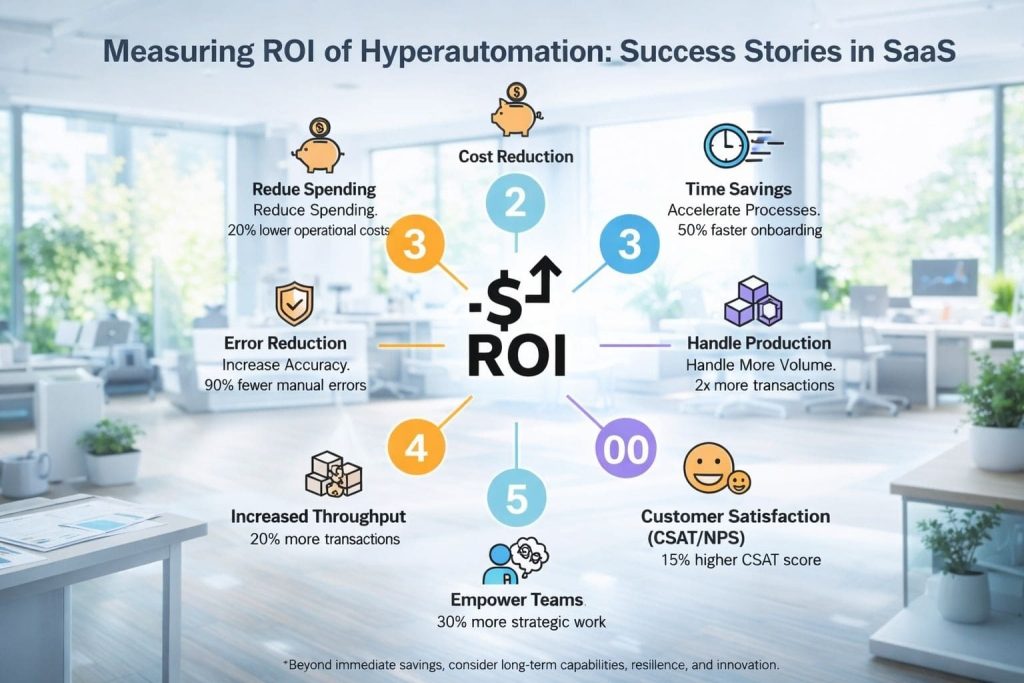
Don’t just focus on the short term. Hyperautomation for SaaS builds long-term capabilities. It makes your business more adaptable. It prepares you for future growth. The ROI extends beyond immediate savings. It includes resilience and innovation. This is a holistic view.
Remember to consider intangible benefits too. Improved employee morale. Enhanced brand reputation. Greater competitive advantage. These are harder to quantify. But they are incredibly valuable. They contribute to the overall success of digital transformation for businesses.
Regularly review your hyperautomation for SaaS initiatives. Are they still delivering value? Are there new opportunities for automation? The market changes. Your business needs change. Your automation strategy must evolve with them. It’s an ongoing process of optimization.
Advanced strategies for hyperautomation in SaaS
You’ve got the basics down. Now, let’s talk advanced hyperautomation for SaaS. These strategies push the boundaries. They unlock even greater value. You go beyond simple task automation.
1. Orchestrated Automation: Don’t just run individual bots. Orchestrate them. Use a central platform to manage all your automations. This includes RPA bots, AI models, and human tasks. This creates end-to-end process flows. It ensures smooth handoffs. This is critical for complex hyperautomation for SaaS.
2. Event-Driven Automation: Move from scheduled tasks to real-time responses. Automations trigger based on specific events. A new customer signs up. A support ticket changes status. A payment fails. These events automatically kick off workflows. This makes your hyperautomation for SaaS more dynamic.
3. Human-in-the-Loop (HITL) Automation: Not everything can be fully automated. Design workflows where humans can intervene. They review exceptions. They make complex decisions. The system then learns from these interactions. This blends human intelligence with automation. It’s crucial for robust hyperautomation for SaaS.
4. Predictive Automation: Use AI to anticipate needs. Predict potential issues. Automate preventative actions. For example, predict server overload. Automatically provision more resources. This proactive approach prevents problems. It keeps your SaaS running smoothly. This is advanced AI-driven automation.
5. Autonomous Process Discovery: Go beyond manual process mining. Use AI to continuously discover and map processes. The system identifies new automation opportunities. It suggests improvements. This makes your hyperautomation for SaaS self-optimizing. It’s a continuous improvement loop.
6. Hyperautomation as a Service (HaaS): Consider offering some of your internal automations to customers. Or, use specialized HaaS providers. This can extend your reach. It can create new revenue streams. It’s a bold move for hyperautomation for SaaS leaders.
7. Ethical AI and Automation: Integrate ethical considerations from the start. Ensure fairness, transparency, and accountability. Avoid bias in your AI models. Protect customer data. This builds trust. It ensures your hyperautomation for SaaS is responsible.
These advanced techniques require a mature enterprise automation strategy. They demand deeper integration. But the rewards are significant. You build a truly intelligent and adaptive organization. This is the pinnacle of digital transformation for businesses.
Common mistakes in hyperautomation for SaaS
Even with the best intentions, things can go wrong. Avoid these common pitfalls. They can derail your hyperautomation for SaaS efforts. Learning from others’ mistakes saves you time and money.
1. Automating Broken Processes: This is a big one. Don’t automate a bad process. You’ll just get a faster, more efficient bad process. Always use process mining first. Understand the current state. Optimize it manually if needed. Then automate.
2. Lack of Clear Objectives: Automating without a clear goal is pointless. What problem are you solving? What ROI do you expect? Without objectives, you can’t measure success. Your enterprise automation strategy needs clear targets.
3. Ignoring Human Element: Automation isn’t about eliminating people. It’s about augmenting them. Don’t neglect change management. Communicate openly with employees. Address their concerns. Get their buy-in. A culture of resistance will kill hyperautomation for SaaS.
4. Underestimating Integration Complexity: Hyperautomation for SaaS involves multiple technologies. Integrating them can be complex. Don’t underestimate the effort. Plan for robust integrations. Ensure data flows smoothly between systems.
5. Lack of Governance: As your automations grow, you need control. Without proper governance, you risk chaos. Bots doing conflicting tasks. Security vulnerabilities. Establish clear rules and responsibilities. This is vital for scalable hyperautomation for SaaS.
6. Failing to Monitor and Maintain: Automations aren’t “set it and forget it.” Systems change. Applications update. Your automations need continuous monitoring. They require regular maintenance. Neglecting this leads to broken workflows.
7. Trying to Do Too Much Too Soon: Don’t bite off more than you can chew. Start small. Achieve quick wins. Build confidence and experience. Then scale your hyperautomation for SaaS initiatives. A phased approach is always better.
8. Choosing the Wrong Tools: Not all tools are created equal. Some are better for RPA. Others excel at Low-code/No-code development. Pick tools that fit your specific needs. Ensure they integrate well with each other. A mismatched tech stack causes headaches.
9. Neglecting Security: Automations often access sensitive data. They interact with critical systems. Security must be paramount. Implement strong access controls. Encrypt data. Regularly audit your automations. Don’t let hyperautomation for SaaS create new vulnerabilities.
10. Focusing Only on Cost Savings: While cost reduction is a benefit, it shouldn’t be the only one. Look for improvements in quality, speed, and customer experience. A holistic view of ROI captures the true value of digital transformation for businesses.
Avoiding these mistakes will greatly increase your chances of success. You’ll build a resilient and effective hyperautomation for SaaS program.
Hyperautomation for saas: frequently asked questions
You’ve got questions about hyperautomation for SaaS. I’ve got answers.
Q1: Is hyperautomation only for large enterprises, or can smaller SaaS companies benefit too?
Absolutely not. Hyperautomation for SaaS benefits companies of all sizes. Smaller SaaS businesses often have limited resources. They can gain massive efficiency. RPA and Low-code/No-code development tools are often scalable. They are also more affordable than you think. You can start small. You can automate key processes. Then you can expand as you grow. It’s about smart resource allocation.
Q2: How long does it typically take to see ROI from hyperautomation for SaaS?
The timeline varies. It depends on the complexity of your processes. It also depends on the scope of your initial projects. Many companies see initial ROI within months. Quick wins from RPA projects can be almost immediate. More complex AI-driven automation might take longer. They require more data for training. A well-planned enterprise automation strategy helps accelerate ROI. Continuous monitoring is key. You can adjust as needed.
Q3: Will hyperautomation replace human jobs in my SaaS company?
This is a common concern. The goal of hyperautomation for SaaS isn’t job replacement. It’s job augmentation. It takes away the tedious, repetitive tasks. This frees up your employees. They can focus on more creative work. They can do higher-value activities. It often leads to upskilling opportunities. Your team becomes more strategic. They become more innovative. It’s about making your workforce more effective. It’s about empowering people.

PhD researcher & computer science lecturer (AI & automation)
AI tools + smart workflows to help freelancers & SaaS companies scale
Digital marketing & media buying specialist (data-driven growth)