
Most proposals fail before they’re even opened. The ones that land do one thing consistently: they start by proving the writer actually read the client’s brief. Not the boilerplate version of it. The specific brief. The specific problem.
I’ve reviewed hundreds of proposals over the years, some win deals, most don’t. The difference is rarely about being fancy or thick or full of colorful charts. It’s about structure, when a prospect opens your proposal, they want one thing : clarity that you understand their problem and have a way to fix it, everything else is noise.
The 7-Step Proposal Framework That Works
Let me walk you through the structure that actually converts. This isn’t theory. Sales teams and freelancers use this framework to close deals consistently.
Step 1: The Cover Page and Opening Context
Your proposal starts before the content. The cover page sets tone. It should include your company name, the client’s name, the proposal title, and the date. Clean. Professional. No fluff.
But the real opening is your cover letter or executive summary that follows. This is where you show you were listening. Reference something specific from their brief or previous conversation. If they mentioned they’re frustrated with slow vendor turnaround, acknowledge that directly. If they have a seasonal spike in August and need a solution ready by July, call it out.
This paragraph isn’t about you yet. It’s about them. Make it clear you’ve done homework.
Step 2: Problem Statement
Before presenting a solution, you need to prove you understand the problem. Restate their challenge in your own words. Be specific. If a client says they need better internal communication, don’t just nod and repeat that phrase. Dig deeper. Do they mean their teams can’t align on projects ? That information silos keep different departments from seeing the full picture? That approval processes are too slow?
The client’s executives will read your problem statement and either think, “Yes, they get it” or “They don’t understand what we’re dealing with.” There’s no middle ground. Spend time here.
Include any numbers or metrics you can find. If they’ve shared that proposal turnaround currently takes three weeks, mention that. If you know their team is at 60% capacity utilization, include it. Numbers show you’ve analyzed the situation, not just skimmed their email.
Step 3: Proposed Solution and Approach
Now you explain how you’ll fix it. This section is your methodology, the actual steps you’ll take, the approach you’ll use, and why it works.
Be concrete. Instead of saying “we’ll implement best practices,” say what those practices are. Instead of “we’ll streamline your workflow,” describe the specific workflow changes and tools. A prospect reading this should be able to picture what working with you actually looks like.
Many proposals fail here because the solution section is vague. “We’ll improve your marketing” isn’t a solution. “We’ll audit your top 50 pages for keyword gaps, prioritize 15 quick wins, and create a 90-day content calendar targeting search volume in your sweet spot” is a solution.
Include a visual here if possible , a simple workflow diagram, a before-and-after comparison, or a timeline. Even a basic graphic breaks up dense text and makes your approach easier to follow.
Step 4: Deliverables
What exactly will the client get? Be specific enough that they couldn’t hire someone else and claim you didn’t deliver.
Instead of “marketing strategy,” list the actual deliverables: a competitive analysis, a keyword research document, a 12-month content calendar, a brand voice guide, quarterly performance reports. Break it into phases if appropriate.
For each deliverable, include a timeline. “You’ll receive the initial audit by January 15. The content calendar will be delivered by February 1.” This manages expectations and shows you have a schedule.
Use a simple table or bulleted list. Prospect reading your proposal should see exactly what they’re paying for.
Step 5: Timeline and Milestones
Projects that drag on and never quite finish are projects clients regret. Show a clear schedule.
Break the project into phases with start and end dates, associated deliverables, and key checkpoints. If you’re doing a three-month engagement, what happens in month one, month two, month three. What does the client need to do on their side to keep things on track. Are there decisions they need to make by certain dates.
A prospect looking at a vague “we’ll start right away” timeline worries that right away means next quarter. Specificity builds confidence.
Step 6: Pricing and Investment
This section makes or breaks the deal. Transparency here builds trust. Vagueness kills proposals.
Show the breakdown. If the total is $25,000, show what portion covers research, what covers strategy, what covers implementation, what covers reporting. Some clients want flat fees, some want hourly rates, some want value-based pricing tied to results. Different approaches for different situations. But whatever you choose, explain the logic.
Many proposals include multiple options. “Option A includes the audit and three months of optimization for $15k. Option B includes everything in Option A plus weekly reporting and quarterly strategy sessions for $22k.” This gives clients choice without opening the conversation to endless negotiation.
Payment terms matter. Are you asking for 50% upfront and 50% on completion. Monthly installments tied to milestones. Net 30 after delivery. Make it clear.
Step 7: About You and Next Steps
The final section is your credibility. Who are you. Why should they trust you with this.
This isn’t a long biography. It’s your relevant experience. If you’ve solved similar problems before, mention it. Specific numbers help: “We’ve helped 40+ agencies cut proposal creation time by an average of 70%.” or “Our average project closes within two weeks of proposal submission.”
Include team members if appropriate. If a specific person will manage their project, introduce them. Add a testimonial or two if you have them ,nothing sells like a client saying “this person actually delivered.”
Then end with a clear next step. “Let’s schedule a 30-minute call next week to answer questions about the approach.” or “We’ll keep this proposal open through January 15 for acceptance. Let me know if you want to discuss anything before then.” Make it easy for them to say yes.
Common Mistakes That Kill Proposals
Making it about you instead of them : Your credentials matter, but they matter less than solving the client’s specific problem. Restructure every proposal around what they need.
Being vague about price : Clients would rather hear a high number they can evaluate than be left guessing. Transparency builds trust faster than hiding cost until a later conversation.
Writing too long : A 40-page proposal isn’t more persuasive. Tighter writing that removes filler actually increases the chance a prospect reads the whole thing. Aim for 5 to 15 pages depending on complexity.
Forgetting to personalize : The best proposal template is worthless if you don’t customize it for each client. One sentence acknowledging their specific situation changes the whole tone.
Weak call to action : Don’t end with “let me know if you have questions.” End with “let’s meet Tuesday at 10am to walk through the approach” or “I’ll follow up Thursday if I haven’t heard from you.” Clear, time-bound next steps get responses.
The Template You Actually Need
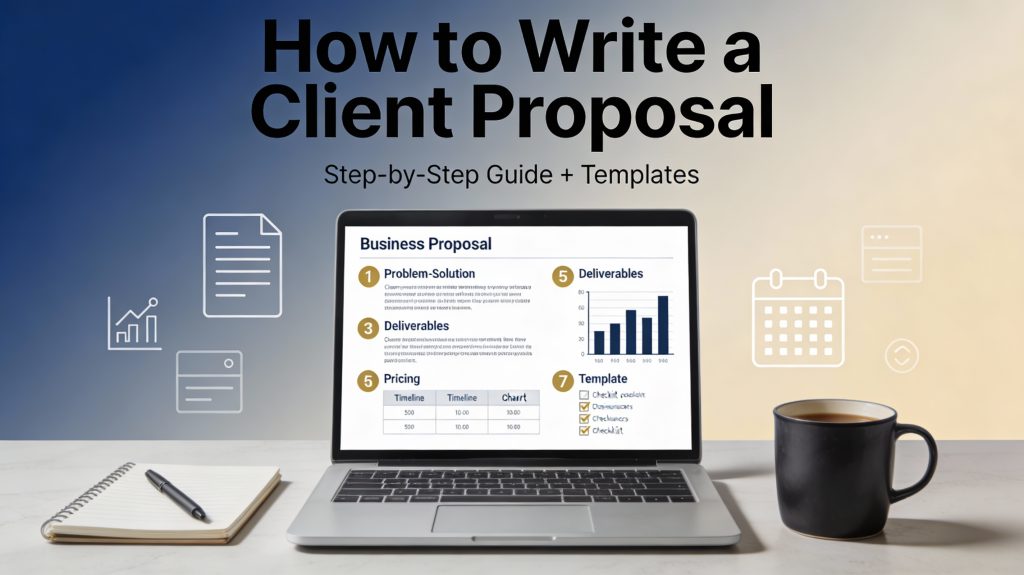
Rather than hand you a massive template with 20 sections you’ll never use, here’s the minimal structure that works: cover page, executive summary (one page max), problem statement (half page), proposed solution (one page), deliverables list (half page), timeline (half page), pricing breakdown (half page), about us (quarter page), next steps (quarter page).
That’s 5 pages total for a straightforward project. Add complexity and depth only where needed.
The critical move is putting real effort into the first three sections executive summary, problem and solution. Those three sections do 80% of the persuasion work. If a prospect gets those right, the rest is details.
How to Test and Improve Your Proposals
You don’t need fancy software to track which proposals work. Pay attention to what happens after you send them. Which clients ask follow-up questions. Which ones say yes immediately. Which ones never respond. Look for patterns in your wins.
Did you win because the price was low or because the approach was unique. Did clients push back on timeline or scope. Did they ignore certain sections. Use this feedback to refine your next proposal.
One practical move: when you land a client who accepted your proposal, ask them what made them choose you. Often it’s one or two specific things. That’s your signal to emphasize those things in future proposals. When you’re building winning proposals that convert consistently, the framework and structure matter. But the real work is understanding each client deeply enough to make your proposal feel like it was written specifically for them, not pulled from a template and filled in with their name.