
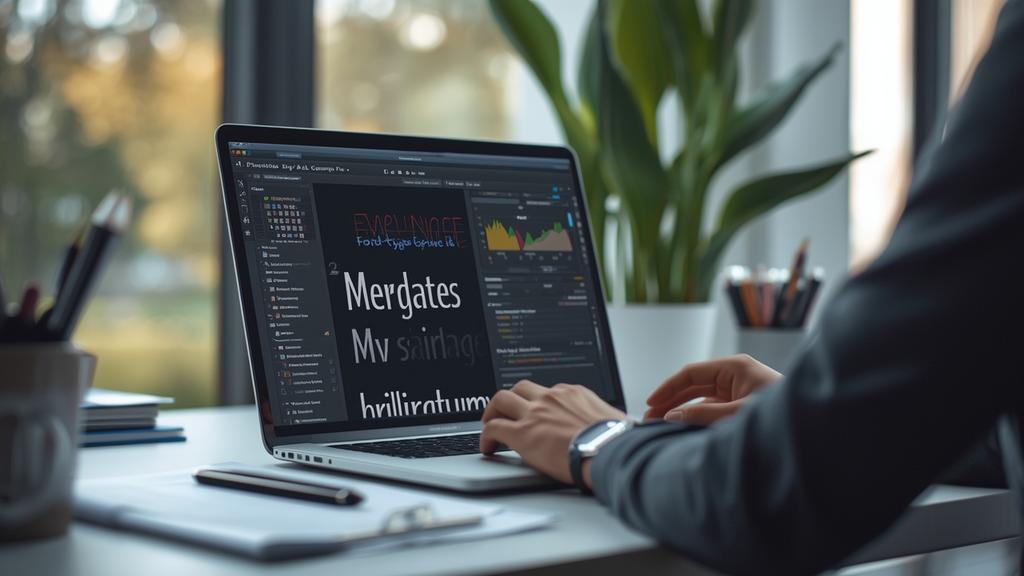
Finding the perfect font pairing is a science that AI has finally mastered. Enhance your layouts with these intelligent typography assistants.
Modern design workflows no longer require hours of manual scrolling through font libraries. By early 2026 machine learning models have reached a point where they can analyze the emotional weight of a brand and suggest weights and styles that align perfectly with visual intent.
The shift toward neural font selection in 2026
Typography has moved beyond simple aesthetics to become a data driven component of content strategy. In the current landscape of 2026 digital content creators use ai typography tools to ensure their text is not only legible but also optimized for psychological impact. Recent industry data shows that automated font selection reduces design iteration time by nearly 45 percent for freelance designers. This efficiency allows solo entrepreneurs to focus on high level strategy rather than getting bogged down in the minutiae of kerning and line height adjustments.
Neural networks now look at the relationship between characters to predict how a human eye will move across a page. These tools analyze the contrast between headings and body text to ensure a natural reading flow. For ghostwriters and digital creators this means higher engagement rates as readers find the content more digestible and visually appealing.
Top ai typography tools dominating the market
As we move through January 2026 several platforms have established themselves as essential for any professional creator. These tools vary in their complexity and specific use cases but all share the goal of simplifying the design process.
Fontjoy 3.0
Fontjoy remains a favorite for its simplicity and the power of its deep learning backend. The latest 2026 update includes a semantic search feature where you can describe the mood of your project like professional yet approachable to generate a three font palette. It uses a high dimensional vector space to find fonts that are mathematically similar or complementary. The basic version is free while the pro tier at 8 dollars per month offers advanced integration with design software and cloud syncing for custom font libraries.
Adobe Spectrum AI
Adobe has integrated its generative engine directly into the typography panel of its creative suite. This tool analyzes the images in your layout and suggests fonts that match the geometric shapes found in your graphics. It is part of the Ultimate AI Design Toolkit which many professionals now consider the industry standard. The current subscription for the typography module starts at 15 dollars per month for solo users providing access to a massive library of licensed fonts that the AI automatically sorts based on your project history.
Monotype Neural Engine
Monotype has introduced a sophisticated engine that focuses on brand consistency. It is particularly useful for those using ai branding tools to create a cohesive identity across different platforms. This engine can take a single logo file and generate a full typographic system including custom weights that do not exist in the original font file. The pricing is based on a credit system starting at 20 dollars for five custom generated font families.
Automating font pairing for digital readability
One of the biggest challenges for freelance writers is ensuring that their long form content remains readable on mobile devices. AI assistants now provide real time feedback on legibility scores based on the latest WCAG 3.0 accessibility standards. These tools look at x-height and stroke thickness to predict how a font will perform on low resolution screens or in bright sunlight environments.
In 2026 font pairing is no longer about just picking two fonts that look nice. It is about understanding the contrast ratio and the visual hierarchy. AI tools now provide a heat map of where a reader’s attention is likely to drop off based on the font choice. By adjusting the typography according to these insights creators can maintain a steady rhythm throughout their articles and blog posts.
Creating custom typefaces with generative models
The rise of generative AI has made it possible for solo entrepreneurs to own unique typefaces without hiring a type foundry. New platforms like FontGenius allow users to sketch a few characters and have the AI generate a full 256 character set in seconds. This democratization of type design means that even a small blog can have a signature look that is entirely unique to their brand.
These custom fonts are fully responsive. In 2026 variable font technology has merged with AI to create typefaces that change their weight and width based on the size of the browser window or the device being used. This ensures that your typography always looks bespoke regardless of how the audience accesses your content.
Practical implementation for content creators
To get the most out of these tools you should start by defining your brand voice in three keywords. Feed these keywords into your chosen AI typography tool to establish a baseline. Most creators find that a combination of a serif heading and a sans-serif body works best for readability but the AI might suggest a modern slab serif for specific niches like tech or finance.
Always test your generated pairings across different backgrounds. Modern ai typography tools include a sandbox mode where you can preview how your text looks over images or videos. This is crucial for ghostwriters who produce content for social media where text overlays are a primary engagement driver. Statistics from early 2026 indicate that content with AI optimized typography social media posts see a 22 percent increase in share rates compared to those using default system fonts.
The future of type in 2026 and beyond
We are seeing a move toward empathetic typography where the font actually shifts slightly in weight to reflect the tone of the writing. While this technology is still in the early adoption phase for high end editorial sites it represents the next frontier in digital communication. For now focusing on the available ai typography tools will give you a significant advantage in a crowded digital marketplace.
Efficiency is the goal for any freelancer or solo entrepreneur. By offloading the technical aspects of font selection and pairing to intelligent assistants you free up creative energy for what matters most which is telling your story. Use these tools as a foundation and then apply your human intuition to make the final adjustments that give your work its unique soul.

Enthusiast in exploring AI tools, blogger, and founder of TaskAITools. I help freelancers and businesses grow by providing smart and innovative AI solutions.