The AI video generation market is projected to surge from $716.8 million in 2025 to over $2.5 billion by 2032, while demand for AI video creators on freelance platforms has jumped 66% in the past year alone. These numbers reflect a fundamental shift: video production is no longer the exclusive domain of expensive studios and specialized teams, but an accessible workflow for solo creators armed with the right AI tools.
This comprehensive guide examines how AI is reshaping every stage of video creation—from concept to final export—and which tools actually deliver on their promises for freelancers and content creators working under real deadlines.
Why AI Video Tools Matter for Freelancers
Traditional video production demands significant time investment across multiple specialized tasks: scripting, filming or sourcing footage, editing, color grading, sound design, and format optimization for different platforms. For freelancers juggling multiple clients or creators maintaining consistent publishing schedules, this workflow creates bottlenecks that limit output and revenue potential.
AI video tools address these constraints by automating repetitive tasks while maintaining quality standards. Freelancers using AI-powered video production tools save an average of 34% of their time—approximately 45 hours per month—allowing them to scale their services without proportionally scaling their workload. The most significant benefits reported by video course creators include reduced production time (78.8%) and reduced production costs (44.1%).
The technology has matured beyond simple automation. Modern AI video platforms offer text-to-video generation, image-to-video conversion, automated editing with intelligent cut suggestions, real-time enhancement, and multi-platform optimization—all within integrated workflows that previously required multiple specialized software packages.
Understanding the AI Video Tool Ecosystem
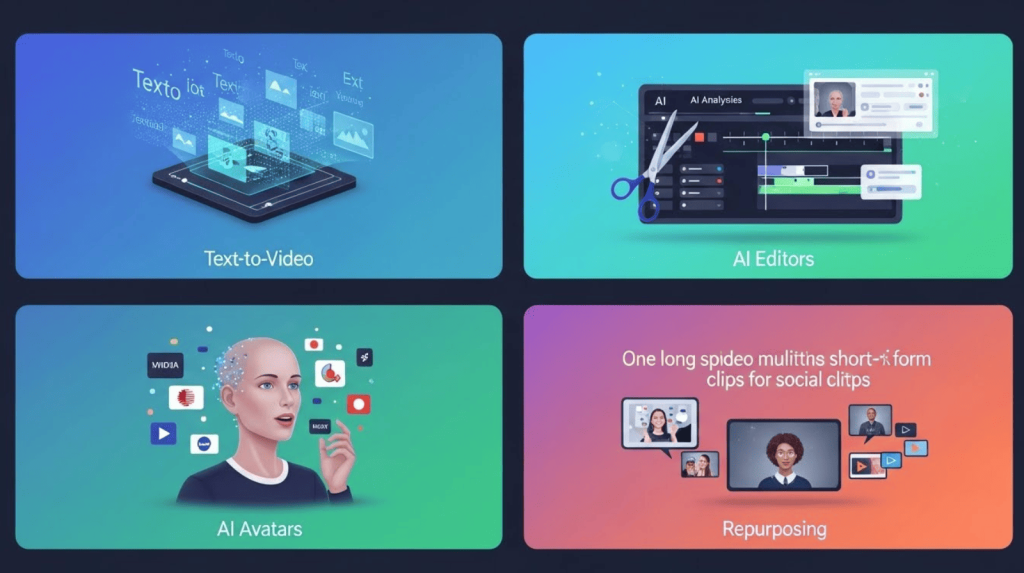
The AI video landscape divides into distinct categories, each solving specific production challenges:
Text-to-Video Generators
These tools transform written prompts or scripts into complete videos, handling visual generation, motion, and basic composition. They excel at creating b-roll footage, visualizing concepts without filming, and producing social media content at scale. Leading platforms like Runway, Luma, and emerging tools like Veo deliver increasingly realistic outputs suitable for professional contexts.
AI Video Editors
AI-powered editing platforms analyze footage to suggest cuts, remove silences, generate subtitles, and automate color correction. Tools like Descript, Opus Clip, and Vizard handle the tedious aspects of editing—trimming, sequencing, audio syncing—freeing editors to focus on storytelling and creative decisions.
AI Avatar & Synthetic Media Tools
These platforms create videos featuring realistic digital presenters from text scripts, eliminating the need for on-camera talent or studio setups. Synthesia, HeyGen, and Vidyard lead this category, offering 140+ languages and custom avatar creation from brief video samples. They’re particularly valuable for training videos, explainer content, and personalized outreach at scale.
Content Repurposing Engines
Specialized tools designed to transform long-form content into multiple short-form pieces optimized for different platforms. These platforms identify highlight moments, create vertical formats, add captions, and generate multiple variations from a single source video—essential for maintaining cross-platform presence without multiplying production effort.
Essential AI Video Tools for Different Workflows
For Social Media Creators
Platforms like CapCut AI, Canva Video, and inVideo AI prioritize speed and format optimization for Instagram Reels, TikTok, and YouTube Shorts. They offer extensive template libraries, trending effect integration, and one-click resizing for multiple aspect ratios. The focus is rapid iteration—creating multiple variations to test what resonates with audiences.
For Client Service Freelancers
Professional freelancers serving business clients require tools that balance automation with customization. Adobe Premiere Pro with AI features, DaVinci Resolve Studio, and Filmora provide advanced control while automating color grading, audio cleanup, and effect application. These platforms integrate into professional workflows where client feedback and revision cycles demand flexibility.
For Educational & Training Content
Creators producing courses, tutorials, or corporate training benefit most from AI avatar tools and screen recording platforms with intelligent editing. Synthesia and Colossyan offer scenario-based features and in-video interactivity specifically designed for learning contexts. When combined with automated transcription and subtitle generation, these tools compress production timelines from weeks to days.
For Marketing & Advertising
Marketing professionals need rapid content generation across formats and platforms. Text-to-video tools that generate multiple creative variations, combined with AI editors that optimize for platform-specific requirements (captions for silent viewing, attention-grabbing opening frames), allow testing creative approaches without full production cycles for each variation.
Building an AI-Powered Video Workflow
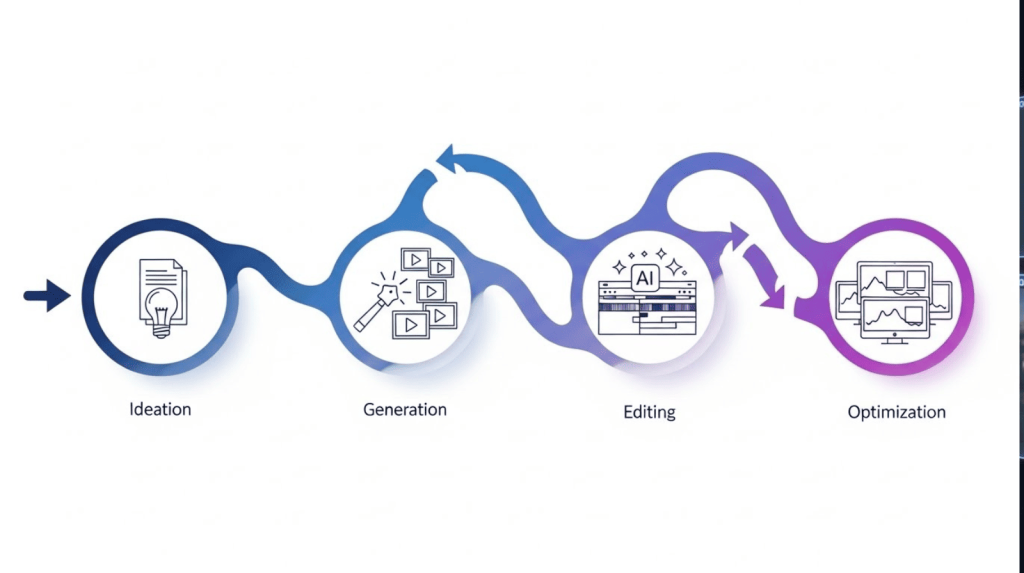
The most effective approach combines multiple AI tools into an integrated workflow rather than relying on a single platform. A typical production pipeline might include:
Phase 1 – Ideation & Planning: AI writing assistants generate script outlines and shot suggestions based on topic inputs. Some platforms like NolanAI offer intelligent creation suggestions that act as virtual creative partners.
Phase 2 – Asset Generation: Text-to-video tools create b-roll footage, AI image generators produce thumbnails and visual elements, and voice synthesis tools generate narration if needed.
Phase 3 – Assembly & Editing: AI editors handle initial cuts, remove silences, sync audio, and apply color correction. The creator focuses on pacing, storytelling, and creative decisions while the AI manages technical execution.
Phase 4 – Optimization & Repurposing: Content repurposing engines extract highlight clips, generate platform-specific versions, add captions, and create multiple variations for testing.
This workflow structure allows freelancers to process multiple projects simultaneously through batch generation and automated task queuing. The key is identifying which tasks genuinely benefit from AI automation versus those requiring human creative judgment.
Practical Considerations for Implementation
Learning Curves & Skill Development
While AI tools lower technical barriers, they don’t eliminate the need for creative skills. Understanding composition, pacing, storytelling, and platform-specific best practices remains essential. The most successful freelancers treat AI as amplification of existing skills rather than replacement
Quality vs. Speed Tradeoffs
AI excels at speed but may require human refinement for premium work. Establishing clear quality standards for different project types—where full AI automation is acceptable versus where human review is necessary—prevents misallocations of time and maintains client satisfaction
Cost Structures & ROI
AI video tools range from free tiers to enterprise pricing. Freelancers should calculate ROI based on time savings multiplied by billable rate, considering that tools saving 45 hours monthly effectively create an additional week of productive capacity.
Emerging Capabilities
The technology continues advancing rapidly. Text-to-video quality improves monthly, real-time collaborative editing is becoming standard, and integration with virtual and augmented reality platforms opens new creative possibilities. Staying current with capabilities allows freelancers to offer cutting-edge services and maintain competitive advantages.
The Strategic Advantag

The freelancers and creators gaining the most from AI video tools share a common approach: they view these platforms not as magic solutions but as workflow multipliers. They invest time understanding capabilities and limitations, build systematic processes that leverage AI strengths while compensating for weaknesses, and continuously experiment with new tools and techniques.
The result is not just faster production but the ability to take on more complex projects, serve more clients simultaneously, and maintain consistent quality across higher volumes—all factors that directly translate to increased revenue and business sustainability in the competitive creator economy.

A.G. Makoudi is a tech writer specializing in SaaS tools and digital solutions, helping readers simplify technology and make smarter software choices.